
Curated by
Hobby-ist Editorial TeamA garden photograph tends to choose one season and hold it still: flowers at their brightest, every path leading toward a perfect patch of color. A real garden keeps moving. By autumn, the most rewarding thing to look for may be a difference rather than a bloom—the way open grassland gives way to a darker grove, and the way your attention changes with it.
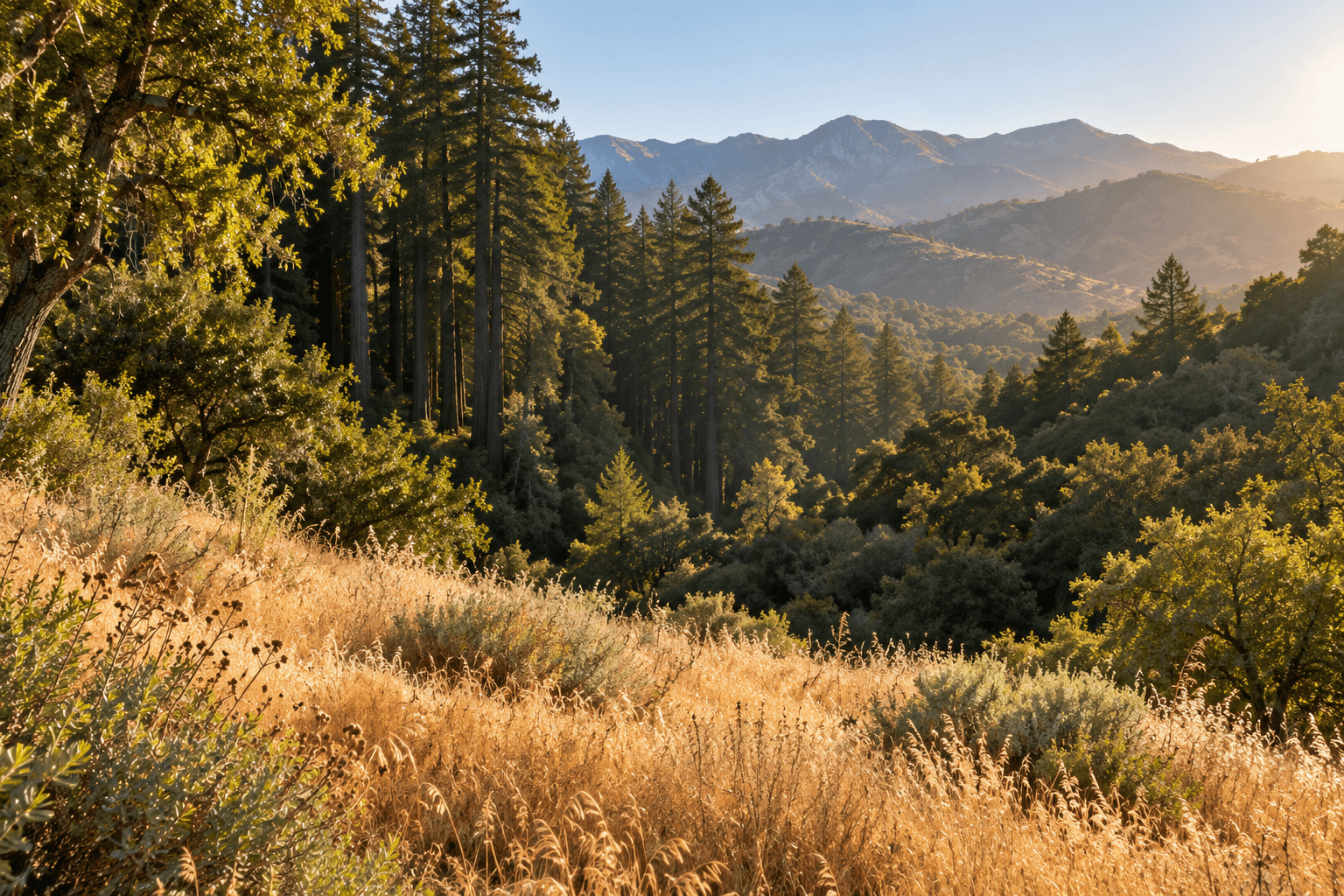
At Santa Barbara Botanic Garden, try following that change from the Meadow to the Redwoods. The collection centers on California native plants and habitats, but the two settings offer very different ways of looking. One opens your view across the ground; the other draws it upward. That contrast gives a first visit a satisfying shape without requiring you to walk every trail.
Read the map as a choice of experiences
Start with the Garden’s current visitor map, which identifies the Meadow, Redwoods, Desert, Backcountry and other areas. It is a menu of different landscapes, not an instruction to finish every trail. Our suggested first visit uses the Meadow and Redwoods as two anchors, with another section only if time, access and energy allow.
At the Meadow, give the open view a few minutes before looking for a label. Notice the shape of the grasses, the space between plants and which stems remain interesting without showy flowers. Then look more closely at one plant label. The point is to connect a name with something you have already noticed, rather than collecting names you will forget on the drive home.
In the Redwoods area, let your eye travel from the ground toward the canopy. Where does the path sit among those layers? How does the light compare with the open Meadow? A photograph frames one tree; these small comparisons help you notice the space around it, too.
We chose this pairing because it gives the walk a story without requiring a guided lecture: one place contains visibly different living arrangements. A plant enthusiast can go deeper into labels; a casual companion can enjoy the contrast without identifying a single species. That makes it a good shared outing when interests differ.
An example plan with room to stop
For a relaxed first visit, our suggested plan leaves about two hours: 10–15 minutes to arrive and choose a route, roughly 25 in the open area and 30 in the grove. Keep the rest for the paths between them, a rest and whatever catches your attention. The spare time matters—you want room to stop when the walk becomes interesting.
If you arrive already tired from the drive, shorten the route before adding the Desert or Backcountry. The official site describes six miles of trails across 78 acres; “garden” should not be mistaken for a single flat display bed. Read the accessibility guidance when choosing paths. A companion who needs a less demanding route should help choose the anchors, not be expected to discover the stairs halfway through.
With children, pick two plant shapes to compare and let their discoveries set the pace. Leave the plants in place: the Garden’s visitor rules ask guests to stay on designated paths and leave plants and wildlife undisturbed. For a hands-on project afterward, our leaf-rubbing journal uses leaves you are permitted to collect elsewhere.
The reservation is part of the outing
As checked October 20, general hours are 10am–5pm, with the last reservation at 4pm. Regular adult admission outside the March–May peak period is $23; the reservation includes parking for one car. The address is 1212 Mission Canyon Road. Use the official reservation page to choose a date rather than arriving on the assumption that a garden always takes walk-ins.
Before choosing a free Sunday, check the actual reservation. The centennial promotion advertises free Sundays, but the October 25 Halloween Pooch Parade page was marked sold out when checked October 20. Choose another available date if necessary, including a paid visit, so the drive begins with a reservation rather than a hope.
For two adults paying the regular $23 admission, the admission subtotal is $46 with one-car parking included—not a whole-trip quote. Add your own fuel or transit, food and any accommodation. Coming from LA, decide whether the garden is the main day trip or part of an overnight stay using your actual starting point and travel conditions. A late slot after a long drive leaves little room to enjoy the route.
Choose the right kind of reward
This is a stronger choice for someone curious about California landscapes than for someone expecting a guaranteed flower display. A collection can be worth seeing when its palette is quiet. If you prefer a historic building and a more architectural garden setting, our Mission San Juan Capistrano story offers a different kind of attention, on a separate regional outing.
Come for two landscapes, and give each enough time to look different. You may leave remembering a patch of light between trunks or the shape of a grass rather than a spectacular flower. Those are good things to bring home from a garden.
Sources & verification
Information checked: 2026-10-20