
Curated by
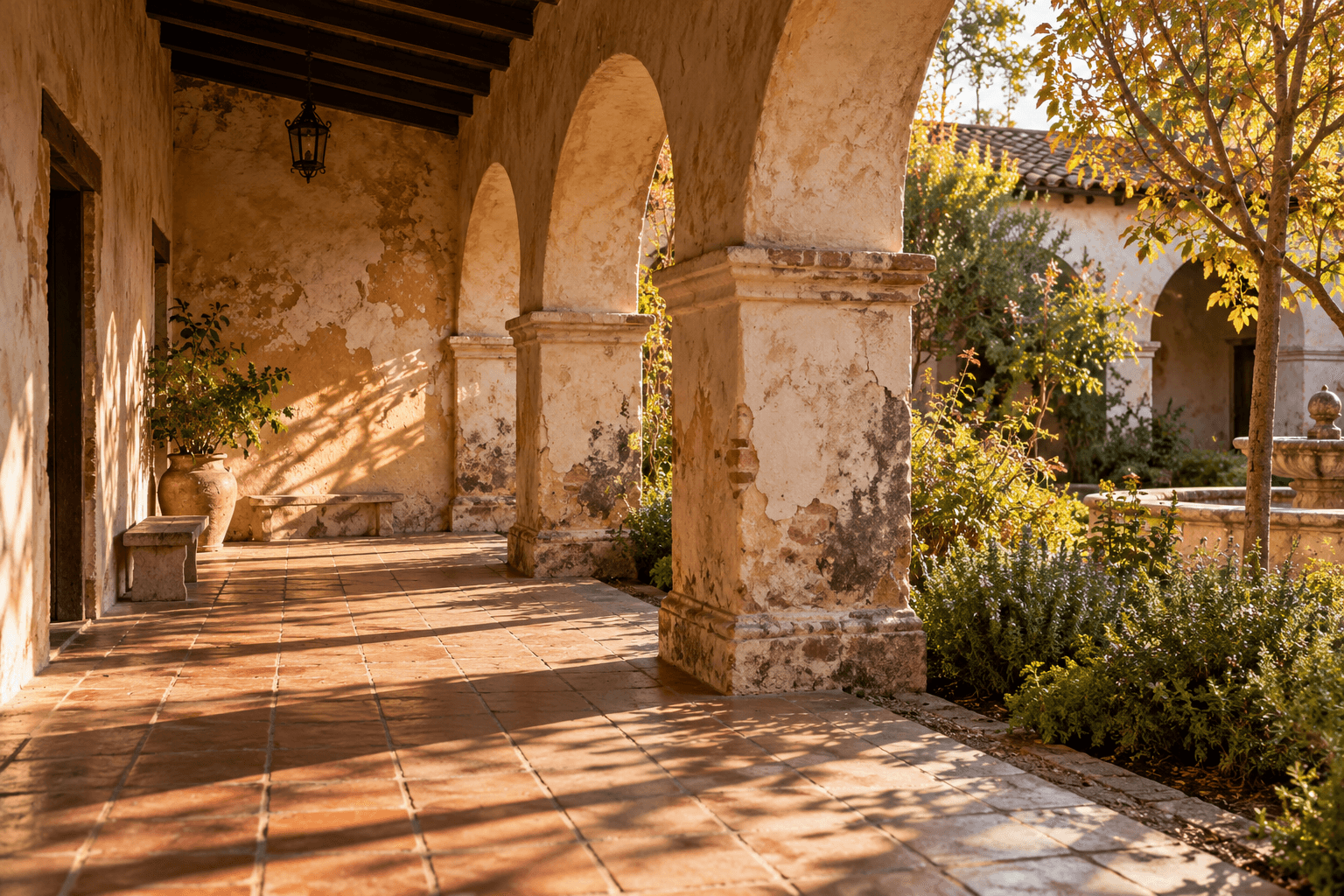
Hobby-ist Editorial TeamA row of arches makes it tempting to keep walking until the view looks symmetrical. You take the picture, straighten the horizon and move on. At a historic mission, that can leave the most interesting part of the visit outside the frame: whose hands made the place, what lives changed around it, and what the surviving walls do not tell you by themselves.
Mission San Juan Capistrano is our pick for an Orange County morning that has room for both looking and listening. The garden can be the invitation. History should get some of the time you came to spend. This is an editorial visit plan built from the Mission’s current visitor information, with a deliberately modest ambition: leave knowing one place better rather than ticking off a whole county.
Let one detail interrupt the route
Start with something smaller than the postcard view: the join between two materials, an arch seen from an angle, the way a planted area meets a path. Give yourself a few minutes before reaching for the camera. Then look for the label or audio stop that explains the space. A detail becomes more memorable when it acquires a story; the photograph can wait until you have heard it.
Our suggested two-hour visit is flexible: roughly 20 minutes to orient yourself, an hour for exhibits and selected audio stops, and the remaining time to revisit the area that caught your attention. These are editorial allocations, not a guided-tour schedule. If a room is busy, change the order. The goal is to preserve attention, not complete a checklist.
Keep the people in the picture
The Mission’s own history account describes Spanish colonial expansion and the profound changes imposed on Acjachemen life, including culture, religion, work and language. That context belongs alongside the architecture. The Acjachemen are not simply a vanished chapter attached to an old building. When reading an exhibit, notice whether it explains the people and labor behind an object as well as its date.
A useful question to carry between rooms is: what would I miss if I treated this only as a beautiful garden? You do not need to become an expert before visiting. You do need enough curiosity to let a difficult detail complicate the pretty view. We chose this outing because those two responses can coexist, and because a quiet visit can still ask something of its visitor.
Make the morning workable
The dedicated admission page lists Tuesday–Sunday, 9am–5pm, with Monday closed; check the calendar for exceptions. A paragraph in the FAQ still carries an earlier closing time, so use the date-specific calendar rather than planning a last-minute arrival. The address is 26801 Old Mission Road. Adult admission is $19, seniors 60+ $16, students with valid ID and youth 5+ $11; children 4 and under enter free. Checked October 17, 2026.
Online tickets are for the selected date and all sales are final. Buying ahead is encouraged, but entrance sales are also available; online same-day sales stop at 3pm. Leave time for downtown parking and read the restrictions at the space you actually use. Historic surfaces are uneven, and some rooms are inaccessible; consult the accessibility map before choosing a route. Bring headphones if you prefer listening on your own device, and follow current onsite audio instructions.
Choose a visit with some breathing room
This suits a person who likes architecture, gardens and the questions behind them. It is a less convincing choice if the whole group wants a fast, interactive attraction. Do not promise an October sighting of the seasonal swallows as the reason to come. The building and its stories are the dependable reason.
For a different kind of close looking nearby, compare Laguna Art Museum’s de la Torre exhibition. If you enjoy the shift from scenery to a question, our historic downtown LA walk takes that habit into city streets. Leave the rest of the afternoon open enough that the Mission does not become just the first item in a race.
Sources & verification
Information checked: 2026-10-17