Getting Started
The First Harmonica Evening: Let One Sound Be Enough
Before a blues solo or a familiar melody, there is a smaller pleasure: discovering what happens when a breath becomes a sound you can shape.
By Hobby-ist Editorial Team · 3 min read · October 19, 2026
In this story
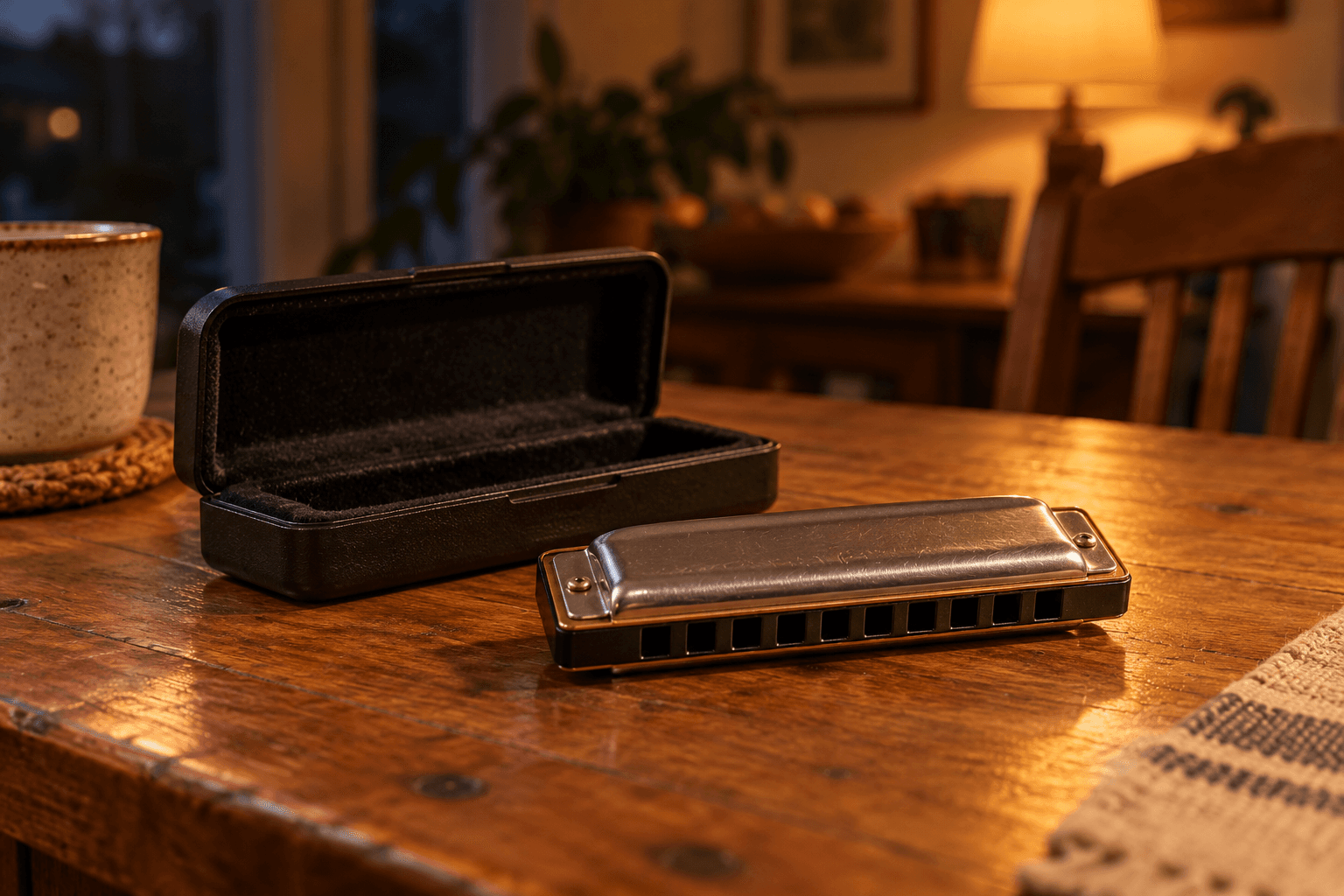
A harmonica fits in a hand, which makes it tempting to expect the learning curve to fit there too. Then the first sound is wider, rougher or less tuneful than the one in your head. This is a good moment to change the evening’s ambition. Instead of playing a song, find one sound you want to hear again.
A pocket-sized instrument can offer a short path into making music, but small does not mean silent or effortless. We like it as a beginning for someone drawn to the physical feeling of a phrase: the start, a pause, the reply. It is less suitable as an invisible activity in a quiet shared room. Consider the people around you before treating portability as permission to play anywhere.
Make sure the lesson belongs to your instrument
“Harmonica” describes different instruments. HOHNER’s instrument guide distinguishes diatonic, chromatic, tremolo and octave types, with different musical uses. A beginner tutorial for a ten-hole diatonic is not automatically a map for the instrument already in your drawer. Read its markings and choose a lesson that names the same type and key.
For this suggested session, use a ten-hole diatonic with a matching beginner lesson. If you have not bought one, choose the lesson first and use its stated instrument requirements to avoid a mismatch. A low price is less useful if it buys an instrument that the instructions cannot explain.
Start with a sound, then leave a space
Hold it comfortably, relax your shoulders and try a soft outward breath across a small group of holes. Rest. Try a soft inward breath. Do not force either sound to imitate a recording. The first comparison is simply whether the two directions feel and sound different. Stop if the exercise becomes uncomfortable or makes you lightheaded.
Now make a tiny pattern: a sound, a pause, another sound. Keep the pauses long enough to hear the room again. A beginner can easily treat empty space as failure, but a pause gives the sound its shape. Try the same pattern gently and then a little more firmly, without pushing. Which version sounds like something you would choose rather than something that happened accidentally?
Single-note clarity will matter as you progress, but it does not need to be the admission test for enjoying the first evening. Follow the matching teacher’s method when you work on it. Chasing a difficult bend before you can produce a comfortable ordinary sound can turn a promising first session into an argument with a very small object.
Borrow a rhythm before you borrow a whole song
Tap a short rhythm on the table, then try giving it breath and sound. Keep it short enough to remember without reading. This is an editorial exercise, not a graded method: its job is to give you something repeatable that is already yours. Two attempts separated by a minute may tell you more than playing continuously while your attention drifts.
Our two-listen music idea can help you notice spaces and repeated phrases in music you enjoy. If you are choosing between instruments, the first-guitar guide gives another way to think about the kind of beginning you actually want. Neither choice needs to become an identity immediately.
End while you still want another go
HOHNER’s care FAQ advises avoiding food residue and sugary drinks while playing, letting the instrument dry before casing it, and following model-specific cleaning advice. Do not assume a wooden-comb instrument can be washed like a kitchen utensil. There is no reason to take it apart after a first session.
Put it away with one simple next step: repeat the small pattern, or return to the matching lesson’s next exercise. No recording needs to be posted and no streak needs to begin. The point of a modest first evening is that returning feels possible.
Hobby-ist would judge this session by one question: did a sound change because you made a deliberate choice? If it did, you have already moved from owning an instrument to beginning a conversation with it.
Sources & verification
Information checked: 2026-10-19