Getting Started
Why Did My Banana Bread Sink? Check the Center Before Blaming the Recipe
A brown crust can hide a center that was not ready to hold. Separate a sunken top from a gummy slice, then check doneness, banana quantity and pan size in a useful order.
By Hobby-ist Editorial Team · 6 min read · October 21, 2026
In this story
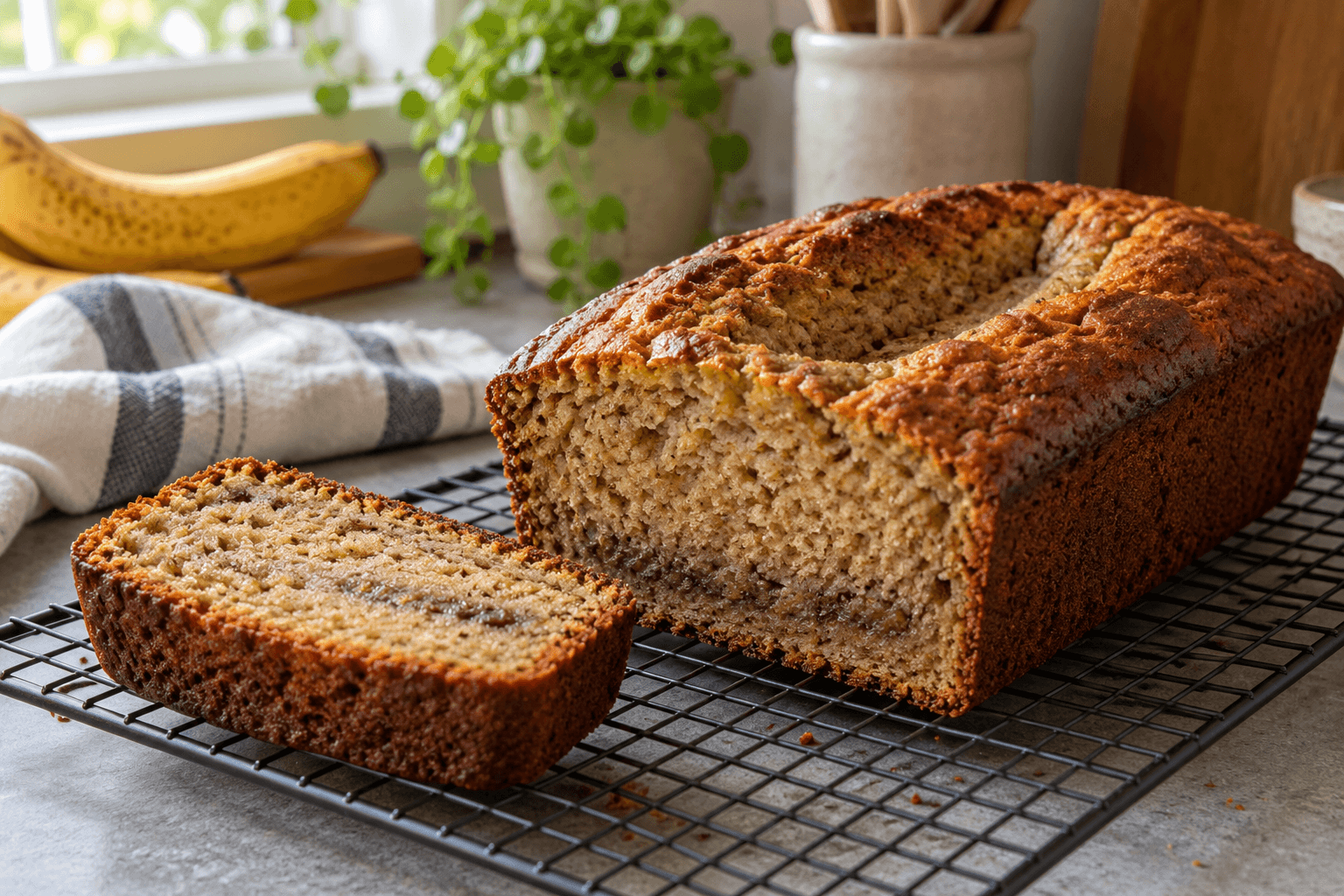
A loaf that rises beautifully and sinks as it cools is giving you information. If the center is also wet or gummy, underbaking is one of the first possibilities to investigate. The crust may have browned before the middle was ready to hold its structure. But a low top by itself does not identify a single cause, and adding more flour or leavener at random can make the next loaf harder to understand.
Start with what actually happened: did the center fall in the oven, after removal, or only appear dense when sliced? Then compare the recipe you intended with the batter and pan you used. Our approach is to preserve a reliable baseline and change the smallest relevant variable. This is a troubleshooting guide, not a new banana-bread formula or a claim that every sunken loaf failed in the same way.
First distinguish a hollow top from an underdone center
Let the loaf cool according to its recipe before judging the crumb. A hot slice can compress or smear and make texture harder to read. Once it is cool enough to cut cleanly, look at the center as well as the edges. A moist, fully set crumb is different from shiny wet batter. A dense strip is evidence to investigate, not permission to declare the entire loaf safe or unsafe from a photograph.
Do not taste raw batter as a test. If the interior is visibly unbaked, do not serve it as finished bread. An attractive crust and a familiar banana smell do not settle whether the center cooked. Our recommendation is to solve the endpoint of the next bake before trying to disguise the current one with a topping.
Write down the point when the loaf was removed and what made you decide it was done: a timer, a toothpick, crust color or a temperature reading. That distinction matters. “It baked for an hour” describes elapsed time, not necessarily the state of the middle in your oven and pan.
Check the slowest part, not the prettiest part
King Arthur Baking’s quick-bread doneness guide explains why a toothpick can be misleading around banana pieces or mix-ins and recommends checking the interior with a thermometer. Its wheat-based quick-bread reference is roughly 200–205°F at the center; the exact recipe remains your starting instruction. This is a baking endpoint, not a universal safety temperature for every food.
Check more than one central location without resting the probe against the pan. If you hit a chocolate chip or a particularly moist fruit pocket, another location helps avoid treating that spot as the whole loaf. Read the instrument’s own instructions, including which portion of the probe measures temperature. A partially exposed tip or a reading near the hot pan can answer the wrong question.
If the top is darkening while the center still needs time, follow the recipe’s guidance for a loose foil tent rather than removing the loaf solely to protect the crust. Do not press foil onto wet batter or change the oven setting repeatedly without a plan. The goal is to let the interior finish while controlling the surface, not to alternate between panic heating and cooling.
Count bananas less casually
Three bananas are not a consistent quantity. Fruit sizes vary, and the amount of mashed banana can differ even when the number is unchanged. Use the weight or measured volume specified by the chosen recipe. Do not add the last half-banana just because it is ripe and inconvenient to keep. That is an ingredient change, not harmless tidying.
As a concrete example, King Arthur’s Whole Grain Banana Bread specifies mashed banana by weight and uses a stated loaf-pan size. You do not need to adopt that recipe, but its precision illustrates what to copy into your own process: an actual amount and a matching pan, not a fruit count borrowed from another formula.
Treat thawed fruit according to the recipe’s directions too. Adding fruit, its extra liquid, yogurt and a new sweetener in the same attempt makes a wetter or denser result difficult to trace. For the next bake, return to the original amounts and approved substitutions. Once the loaf works, you can change an ingredient with a meaningful reference point.
The pan is part of the recipe
A narrower or deeper pan can put the center farther from the heated sides, changing the bake. A wider pan changes the depth in the other direction. The name loaf pan does not establish that two pans have the same internal dimensions. Measure the pan you actually used and compare it with the recipe before deciding that the printed time was wrong.
Pan material also matters. The linked whole-grain recipe gives a specific temperature adjustment for glass or stoneware. That instruction belongs to that recipe and setup; do not apply a single adjustment blindly to every loaf. Follow the method for the pan you choose and avoid overfilling a smaller pan to use every bit of batter.
Check whether the oven reached its set temperature before the pan went in. An external oven thermometer can reveal a difference between the display and the baking environment. Keep the rack position, pan and recipe consistent for one attempt so the result can tell you something. A new pan, lower temperature, extra banana and different flour are four changes, even if they felt like small improvements at the time.
A useful next-bake note is short and specific
Try a note with five entries: recipe and version; banana and flour amounts; pan dimensions and material; oven setting and preheat; final doneness checks. After cooling, add one sentence about the center. You are building enough context to decide what to change, not creating paperwork for a snack.
For example: if the previous loaf had a wet center and was removed only because the timer sounded, keep the recipe and pan the same and improve the doneness check first. If you know the previous attempt used a smaller pan and unmeasured extra banana, restore both specified conditions to recover the baseline. That is different from testing which change caused the failure; you are first trying to make the intended recipe.
If a measured, properly baked baseline still repeatedly fails, then consider the leavener quantity, substitutions and mixing method with the recipe’s author or support resources. Baking soda and baking powder are not interchangeable spoon for spoon. More rise is not automatically more structure, so extra leavener is a poor first response to a collapsed center.
Our vinaigrette guide shows a more forgiving place to explore ratios by taste. The espresso troubleshooting story uses the same habit of naming the result before adjusting a variable. Banana bread rewards that habit too, even though its process cannot be corrected after every spoonful.
The next loaf does not need an impressive new recipe. It needs a middle you actually checked and conditions you can recognize. When it comes out evenly set, the satisfaction is more than a higher top: you know why you decided it was ready.
Sources & verification
Information checked: 2026-10-21