Ideas
The Small Jar That Changes a Salad: Find Your Vinaigrette
Oil, vinegar and mustard become a small lesson in balance. Make one modest batch, taste it on a leaf and learn which adjustment actually helps.
By Hobby-ist Editorial Team · 5 min read · October 20, 2026
In this story
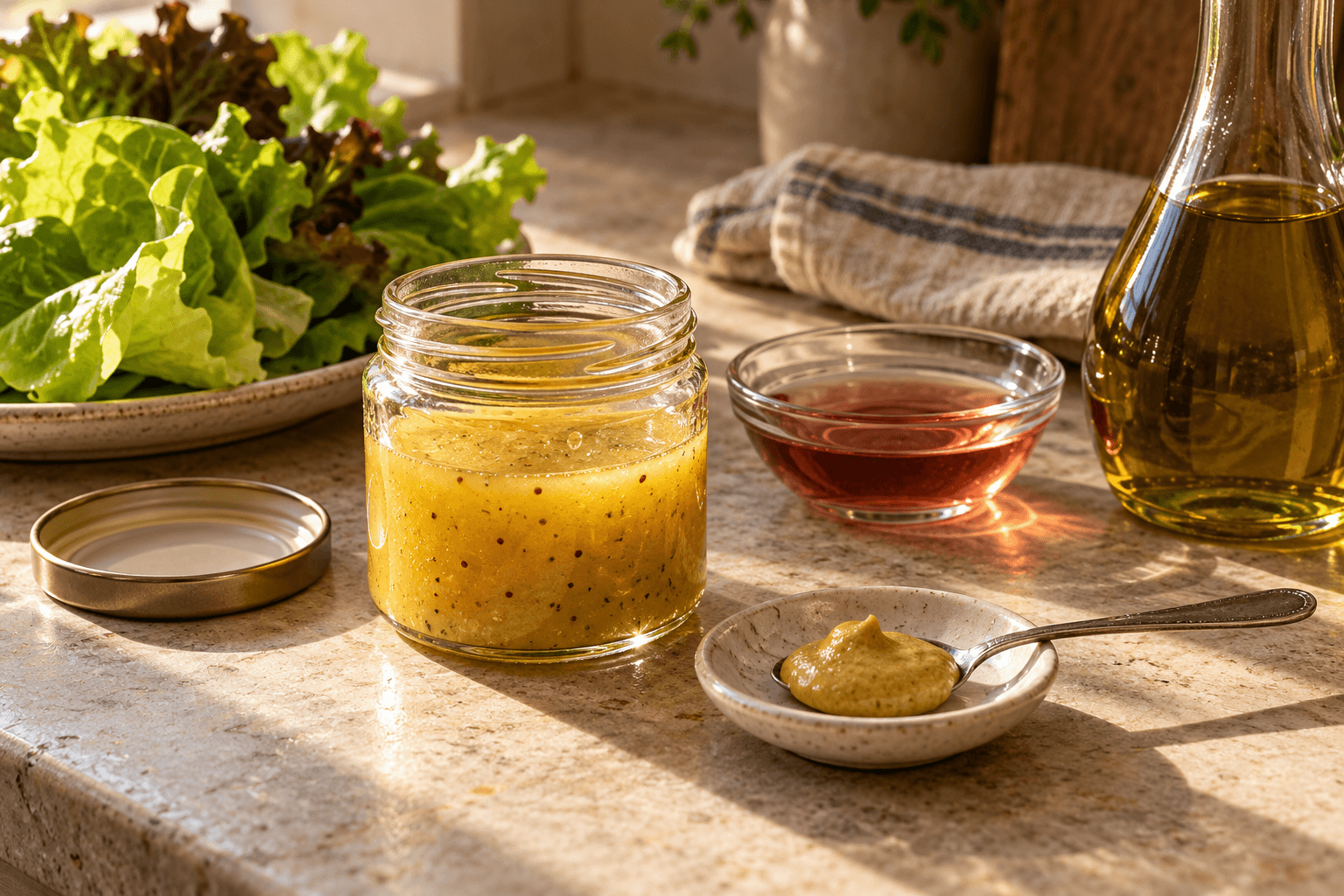
There is a moment when oil and vinegar stop looking like two ingredients in a jar and begin to look like a sauce. The color becomes more even, the liquid catches the light differently, and a spoon leaves with a thin coating. It is a small transformation, but a useful one: the same leaves can now become a side dish with an actual point of view.
Vinaigrette is a good kitchen hobby because the feedback is immediate and the batch can be small. You do not need to produce dinner for six to discover that you prefer a sharper dressing, or that a peppery oil changes the whole balance. The interesting part is learning to name the next adjustment instead of adding a little of everything and hoping.
Start with a small jar and a clear flavor
For a practice batch of about a quarter cup, measure 1 tablespoon wine vinegar (15ml), 3 tablespoons olive oil (45ml), half a teaspoon Dijon mustard, a small pinch of fine salt and a little black pepper. Use ordinary wine vinegar rather than concentrated cleaning vinegar, and an oil you enjoy tasting. The finished amount depends on the mustard and seasoning; you will use only part of it on a small salad.
The oil-to-vinegar ratio is 3:1 by volume. The CAERT dressing lesson hosted by the Illinois State Board of Education describes that classic starting ratio and distinguishes a temporary oil-and-vinegar mixture from an emulsified dressing. It is a starting point, not a rule that everyone should like the same acidity. A sweet balsamic, a sharp wine vinegar and lemon juice will not taste identical at an identical volume.
Keep the first jar simple: oil, vinegar, mustard, salt and pepper. Raw garlic, herbs and sweetness can come later. With fewer flavors in play, you can hear what a few more drops of vinegar actually do. That makes the second jar easier to make your own.
Mix it, then look at it
Use a clean small jar with enough empty space to shake the mixture and a secure lid. Stir the vinegar, mustard, salt and pepper together first, then add the oil. Close the lid and shake firmly for about 20–30 seconds as a practical starting point. Alternatively, whisk the vinegar and mustard in a small bowl while adding the oil in several small additions.
Watch the mixture as you shake it. Mustard helps the oil and watery phase stay dispersed, as Kenji López-Alt explains in his vinaigrette technique article. Look for a fairly even surface and a thin coating on a spoon. If clear pools of oil return while the jar sits, give it another shake before tasting.
Now make a separate judgment: do you like the flavor? A dressing can need another shake and still taste balanced. A perfectly even one can still be too sharp. Treating those as two different questions saves you from pouring in oil to solve a problem that only needed mixing.
The leaf is the tasting spoon
Set out a few clean, dry lettuce pieces and an empty bowl. Dip the edge of one leaf into the dressing and taste the whole bite. Try a second leaf with a slightly different amount. Keep the lettuce the same so you can notice what the coating changes; a spoonful of dressing alone cannot tell you how the salad will eat.
A dressing that seems forceful by itself can become balanced on a leaf. The opposite can happen when the leaf is drowned. Before changing the whole jar, ask whether you want a different flavor or simply less coating. If you are planning a salad with salty cheese or olives, taste a representative bite with that addition before adding more salt to the dressing.
Change a spoonful before changing the jar
Pour a little into a separate bowl for a correction trial. If the bite is aggressively sour, add a few drops of oil, mix and taste with another leaf. If it feels oily and flat, try a few drops of vinegar. If the sharpness is acceptable but the flavor seems absent, test a tiny amount of salt in the sample. Move in small increments so you can stop before the correction becomes the next problem.
If you like the flavor but want a looser consistency, compare a sample with a few drops of water. Water changes the concentration as well as the texture, so it is not interchangeable with oil. Label the experiment in your mind: “thinner” is a different goal from “less acidic.” Do not dilute the entire jar just because someone else’s dressing pours faster.
Once the sample tastes better, make the same adjustment gradually in the jar. Stop when you can name what changed: more acidity, a little salt, less coating on the leaf. That small piece of understanding is more useful at the next meal than an exact imitation of someone else’s dressing.
Let the salad tell you when to stop
Put a portion of dry greens into a bowl larger than you think you need. Start with a little dressing—perhaps a teaspoon for a small handful as a trial—then toss gently and taste one leaf. Add more only if needed. The proposed quarter-cup batch is not a serving instruction to pour everything over two plates.
If dressing pools in the bottom and every bite feels heavy, stop adding ingredients. Add more undressed greens if you have them, or serve a smaller dressed portion beside the meal. Next time, start with less. A sauce recipe can be correct while its use is excessive.
Make the first batch for the meal in front of you, using clean utensils to adjust and serve it. This is a fresh dressing exercise, not a shelf-stable preservation recipe. A modest jar lets you finish one experiment and come back to the next salad with a clear idea.
Our repeat-one-recipe journal develops the same idea of changing one thing at a time. If tasting the oil itself becomes interesting, the Ojai olive-oil outing offers a regional way to explore that ingredient beyond the kitchen.
At the next meal, you may no longer ask only whether the salad is good. You may notice the edge of vinegar, the character of the oil and the amount on the leaf. The little jar has given you a few more words—and a few more choices.
Sources & verification
Information checked: 2026-10-20