Getting Started
Is Your Espresso Sour or Bitter? Taste the Problem Before Changing the Grinder
Both can make you reach for milk, but they do not point to the same adjustment. A simple comparison can help you change one useful variable instead of five.
By Hobby-ist Editorial Team · 4 min read · October 18, 2026
In this story
A sharp, thin espresso and a harsh, bitter one can both taste “too strong” to a beginner. They may need different changes. Sourness can point toward insufficient extraction, while harsh bitterness can suggest too much extraction or a coffee whose roast character you dislike. Neither taste is a diagnosis by itself. Start by describing the cup, then check the dose, yield and consistency of the shot.
That is more useful than turning the grinder several notches, changing the dose and stopping the next shot earlier all at once. You might make a better drink, but you will not know which decision helped. Our beginner method is a controlled comparison for an espresso machine you already use, not a promise that one number or an expensive grinder will suit every bean.
Give the taste a more specific name
Let the drink reach a comfortable tasting temperature and take a small sip. Does the unpleasant part feel sharply tart, dry and rough, smoky, or simply concentrated? Barista Hustle’s extraction introduction distinguishes unpleasant sourness from the broader category of acidity. A bright coffee is not automatically brewed badly. The question is whether its acidity feels balanced and enjoyable to you.
Bitterness and strength are also different. If you are unsure whether concentration is the main issue, compare a little espresso with a little of the same shot diluted using drinking water. Dilution changes concentration; it does not redo the extraction. If a harsh taste remains, more water has not explained its cause. This is a simple sensory comparison, not a lab measurement, and you do not need professional vocabulary to find it useful.
Record a baseline you can repeat
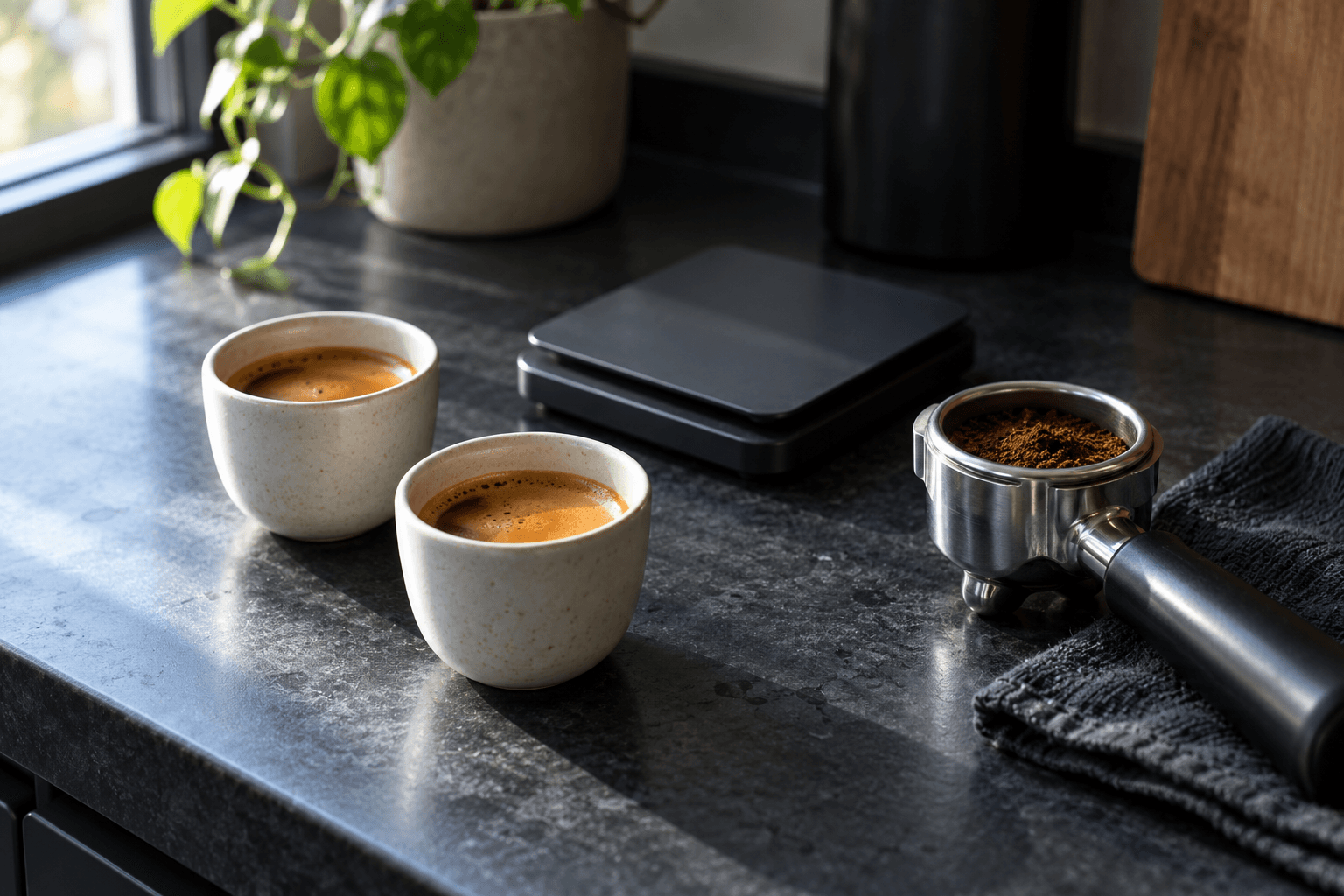
Keep the coffee, basket and preparation routine the same. Weigh the dry dose and the beverage coming out, and note the elapsed time using the same start point each attempt. Follow the machine and basket guidance for a suitable dose. As an example of notation, 18g in and 36g out is a 1:2 ratio; it is not a universal recipe or a required result for your equipment.
Clean and prepare the equipment according to its instructions. Make sure the machine is ready at its intended brewing temperature. Check that the bed of coffee is distributed and tamped consistently. If two otherwise similar shots run very differently, resolve that inconsistency before chasing a flavor conclusion. A changing process gives you several moving targets rather than one clear adjustment.
Use the first adjustment as a question
Baratza’s espresso guide suggests a finer grind for a sour, quick shot and a coarser grind for a bitter, slow one. Use those paired clues rather than taste or time in isolation. Make a small, model-appropriate adjustment while keeping dose and target yield steady, and compare the result. Follow your grinder’s directions about when and how to adjust it; do not force a mechanism.
If the result moves toward a more balanced cup, continue in small steps. If it gets worse, return to the baseline rather than changing several other settings to rescue it. Taste matters more than matching a remembered number of seconds. A roast, basket and coffee combination can work outside the timing window someone else uses, while a textbook-looking shot can still be unpleasant.
If a shot tastes both sour and bitter, uneven extraction is one possible reason. Barista Hustle’s Espresso Compass explains that strength, extraction and evenness interact, and grinding progressively finer does not guarantee better results. Revisit distribution and consistency before assuming the answer is still finer. The compass also shows why a larger beverage yield can be less concentrated while extracting more: stronger and more extracted are not synonyms.
Know when to change the question
A dark, smoky flavor that appears consistently may be part of the roast rather than a fault you can dial away. Water, stale coffee and dirty equipment can complicate the picture too. If the process is repeatable but the taste never suits you, compare with a well-prepared drink made from the same coffee if possible, or choose a different roast you expect to enjoy. The goal is a drink you like, not proving that a particular bag must be ideal.
This method is most useful for a repeatable espresso setup where you can observe dose and yield. Capsule machines and pressurized baskets may offer different controls; use their instructions rather than copying an unpressurized setup. Stop if the equipment behaves abnormally and use support rather than improvising mechanical changes. Sources checked October 18, 2026.
Let the next cup answer one thing
For a different brewing method, our French press guide shifts the variables rather than transferring an espresso recipe. If you enjoy comparing flavors without treating one as universally best, the three-apple tasting explores that habit at a simpler table. A useful next cup does not have to be perfect. It should tell you whether one deliberate change made the coffee more enjoyable.
Sources & verification
Information checked: 2026-10-18