Ideas
Draw the Mug Without Looking at the Page
A handle in the wrong place can be the beginning of a good drawing session. Try a small exercise that makes looking more interesting than getting it right.
By Hobby-ist Editorial Team · 4 min read · October 17, 2026
In this story
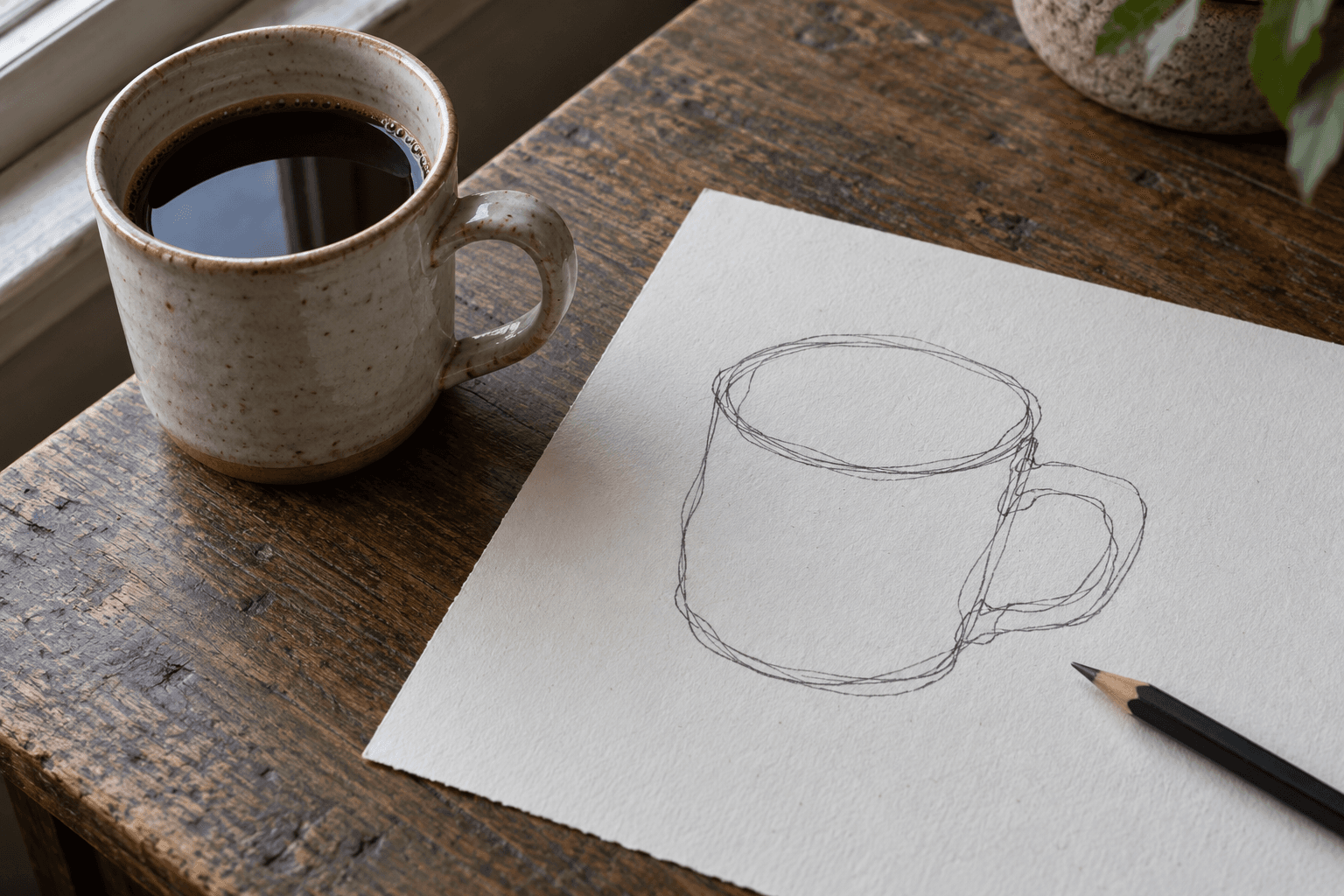
The handle may end up somewhere near the rim. The base may refuse to meet the other side. When you finally look at the paper, the mug might appear to have survived a small earthquake. Keep the drawing anyway. It records something a tidy sketch can hide: the route your eyes actually took.
For this session, put a familiar mug on the table and draw its outline without looking down at the page. This is a blind contour exercise. Your eyes stay open and on the object; “blind” refers to not checking the drawing. Our version is a short, playful home practice, not a test of talent or a promise of rapid improvement. A pencil, ordinary paper and a few quiet minutes are enough.
A familiar thing is harder to see than you expect
We know the symbol for a mug: a rounded rectangle and a loop. The actual object is less cooperative. The top changes shape with the viewing angle, a handle disappears behind an edge, and one side catches more light. The exercise gives those differences a chance to interrupt the symbol you were about to draw from memory.
Choose a mug without a complicated printed design. Empty it, put it on a stable surface and sit where you can see both the rim and handle. Turn the phone face down after setting a short timer if you want one. Use a sheet large enough that missing the planned center is harmless. There is no advantage to making the setup expensive.
Three drawings, three different questions
For the first round, spend about a minute following the outer edge with your eyes while moving the pencil slowly. Try keeping the pencil on the page, but do not restart if it lifts. Let the hand lag behind rather than racing to finish a recognizable cup. When the time ends, look down. Find one section that feels connected to the object before judging the whole.
For the second round, rotate the mug and make the handle your starting point. Give yourself two or three minutes. Notice the empty space inside the handle as carefully as its outside edge. If your pencil wanders off course, follow the next visible edge anyway. Correcting the page would solve a different problem from the one you came to explore.
For the third, allow yourself occasional glances at the paper. This modified version can help if the first attempts were so disorienting that you stopped observing the mug. Compare the drawings afterward: which has a more interesting line, which reveals something about the angle, and which felt most enjoyable to make? Neatness is only one possible answer, and not the question we would start with.
When the exercise becomes another test
A surprisingly common trap is trying to be good at drawing badly. You may start planning charming distortions or checking whether the result looks artistically loose. If that happens, choose a new edge and slow down. You are not auditioning a style. A dull-looking page can still accompany a few minutes of real attention.
This practice suits someone who freezes at a blank sketchbook or keeps erasing the first line. It may be less satisfying when your immediate goal is a measured product drawing or accurate proportions. In that case, use it only as a warm-up and switch to a method that serves the actual task. We would keep the invitation small enough to refuse: one mug, one sheet, no obligation to start a daily streak.
Keep one line, not a score
Date the page and write a brief observation such as “the rim looked flatter than I expected.” Avoid a rating. Next time, change only the viewpoint or the object—perhaps a shoe or a folded cloth—so there is something clear to compare. The value is in noticing what changed, not accumulating an impressive stack of practice sheets.
If choosing what to keep interests you, try taking six photos and choosing one. For a quieter exercise with a different material, a first watercolor session gives color the lead. Both make a useful companion to this page: a small limit can give your attention somewhere to settle.
Put the mug back in the cupboard when you finish. The page may still look strange. The familiar object may look a little less automatic. For one short session, that is a worthwhile exchange.
Sources & verification
Information checked: 2026-10-17