Ideas
When a Flat Square Becomes a Place to Put Things
A small paper box is a good first origami project: the same sheet changes from a surface into a little space. Give yourself one plain square and an unhurried first attempt.
By Hobby-ist Editorial Team · 4 min read · October 16, 2026
In this story
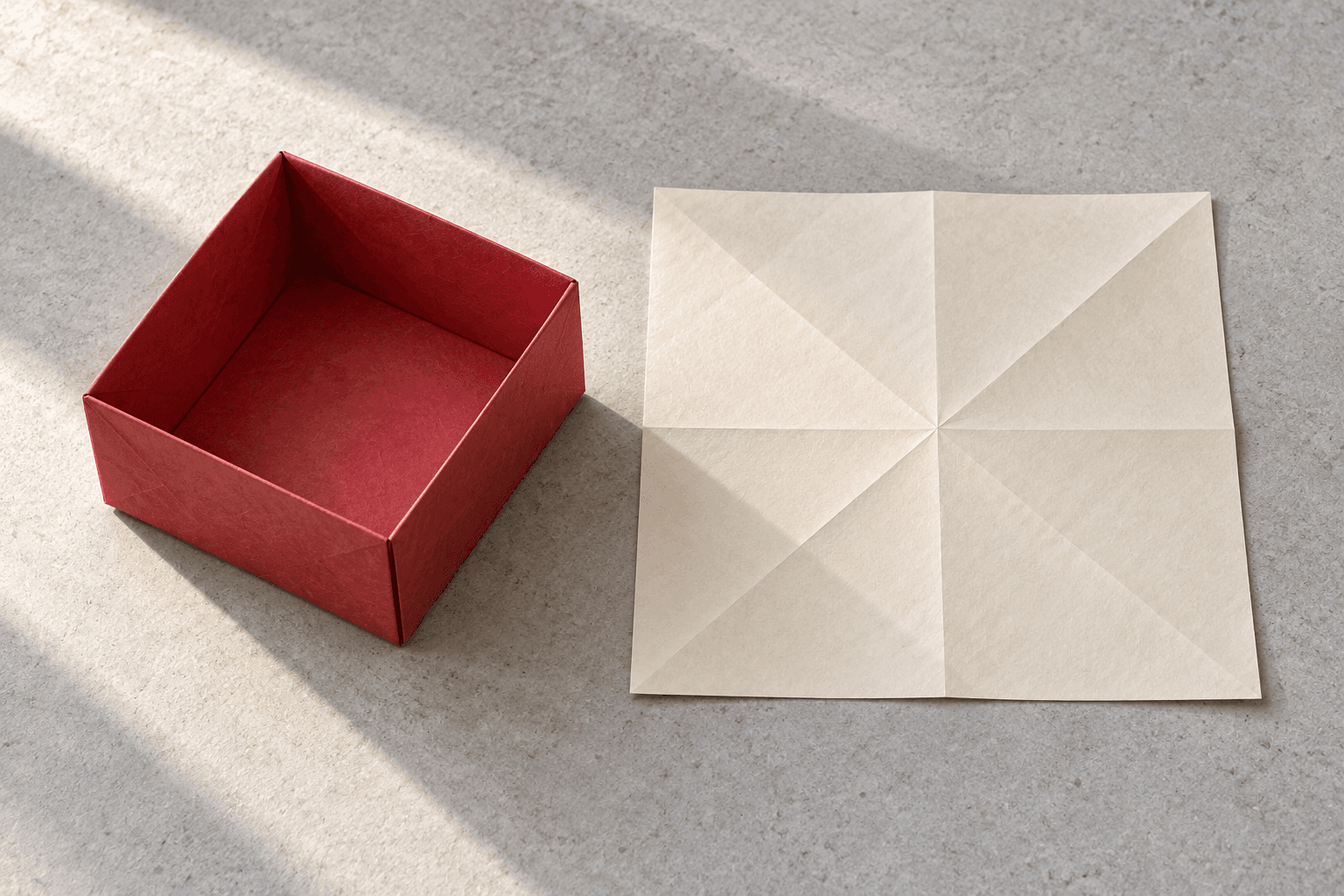
For the first few folds, a square of paper still looks mostly like paper. Then something surprising happens. A wall stands up, a corner holds and the sheet begins to contain a space. You have not added anything, but the object has a different job.
That transformation makes a small traditional masu box a satisfying first origami evening. It is useful enough to keep a few dry desk objects together and modest enough to make twice. More than a perfect result, the first attempt can give you a feeling for how a flat pattern becomes a form.
Choose paper that lets you see what happened
Start with an accurately cut square of ordinary, reasonably thin folding paper. Our preference for a first attempt is a plain color, or two different colored sides, rather than a busy print. It is easier to follow an edge when the pattern is not competing with it. Very thick card may make the small layered corners more frustrating than they need to be.
Put the sheet on a clear surface with enough room to turn it. You do not need a collection of tools before starting. If the paper is not square, however, careful folding will not make every corner line up. Check that basic condition before deciding your hands are the problem.
For a sequence to follow, OrigamiUSA’s Masu page provides a diagram for a traditional model. Keep the diagram beside the work so you can look from one to the other without losing your place. This journal is a way to approach the session; use the actual diagram for the model’s complete folding sequence.
Give a crease a moment to become a decision
Before pressing a fold firmly, bring the intended edges or corners together and check their alignment. Hold that alignment, then smooth the fold from the center outward. The point is not to be slow for its own sake. A crease is harder to correct once several later folds depend on it.
If two edges do not meet, pause before adding more pressure. Is the sheet rotated differently from the picture? Is a layer meant to open rather than stay folded? Turn the paper and compare its outline with the next diagram. A model that suddenly seems impossible may simply be facing the wrong way.
A useful first-session habit is to say what changes in each step: “this corner goes to the center” or “these sides open.” You are making a small connection between the symbol on the page and the movement in your hands. Reading that connection is part of learning origami, rather than an obstacle to get through before the real activity begins.
Let the first box tell you one thing
When the walls stand, put the box down and look at it without adjusting everything at once. Does one corner sit higher? Does the base lie reasonably flat? Is one edge more crisply defined than the others? Choose a single difference you would like to understand on the second attempt.
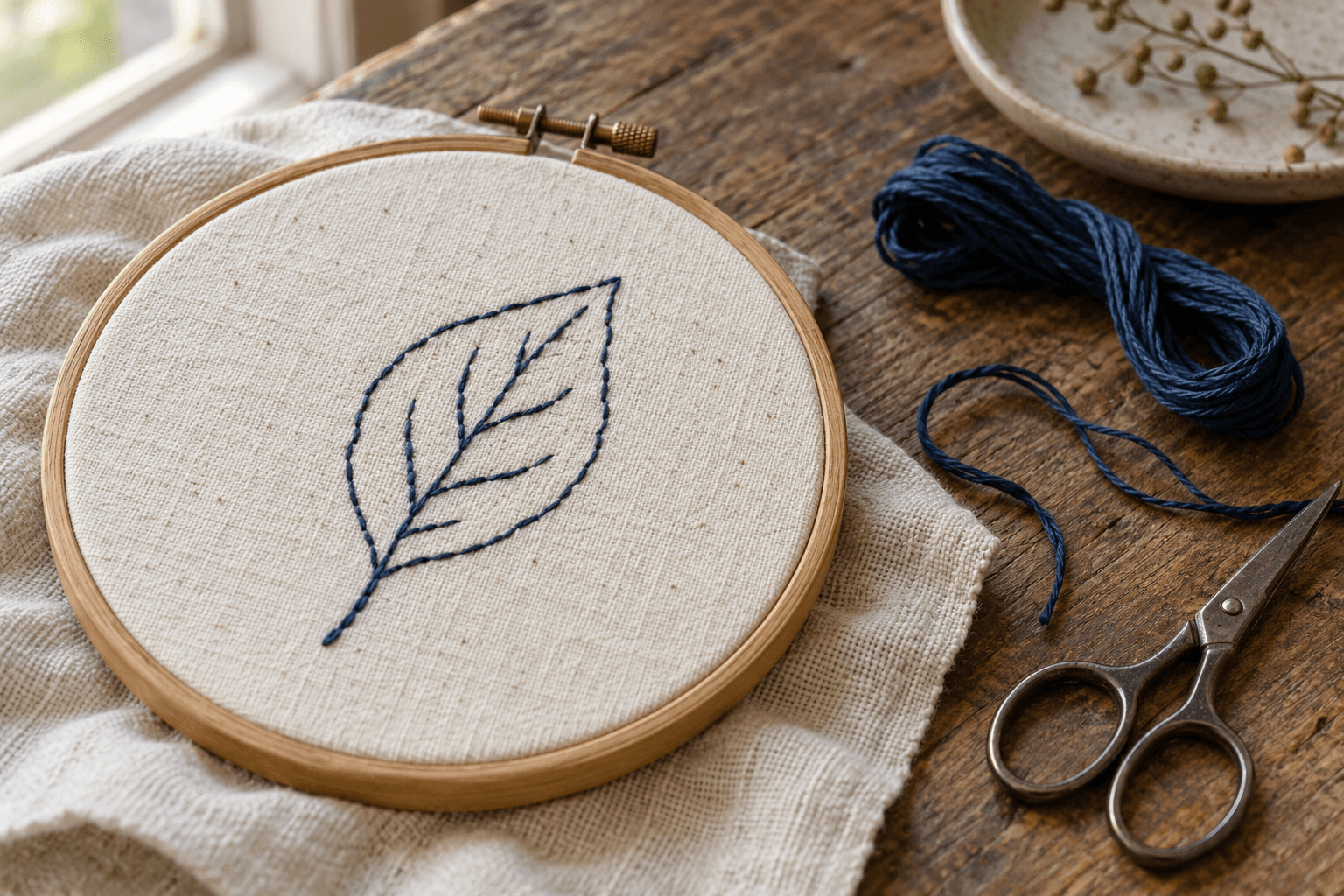
A slightly uneven first box can still be a useful sample. Write a short note on a separate scrap about where the sequence became unclear. That is better evidence for the next session than a general conclusion that you are either good or bad at folding. Our one-leaf embroidery journal offers the same small scale of learning through a visible line.
We would stop after the first box if the attention has become tiring. If you want another, use similar paper and repeat the same model before choosing a harder one. Familiarity can make the second transformation more interesting: you can feel the consequence of a crease you barely noticed the first time.
A small container can have a small job
Try it for paper clips, an eraser or a few lightweight dry items. It is a folded paper object, so keep it away from water, food and tasks that require a strong container. There is no need to frame it as a permanent organizer to justify having made it. A temporary, useful shape is enough.
If your table has to return to dinner afterward, a square sheet and one finished box are easy to clear. The everyday question of where a hobby pauses is also part of our shared-home hobby space journal. Small projects make that negotiation easier.
OrigamiUSA’s free-diagram collection also distinguishes traditional models from authored designs whose diagrams have usage rights. Follow and link the original resources rather than redistributing someone else’s diagrams as your own.
At the end of the evening, you may have a box that is a little crooked. You will also have watched a familiar material acquire an inside. That is a surprisingly good reason to begin with one square.
Sources & verification
Information checked: 2026-10-16