Ideas
Three Apples, One Ordinary Afternoon, and a Better Question Than “Which Is Best?”
You do not need wine glasses or a tasting kit to get curious about flavor. Put a few apples side by side and notice what changes between the first bite and the second.
By Hobby-ist Editorial Team · 4 min read · October 16, 2026
In this story
An apple often disappears into a bag as a practical snack. You know whether you like it, but not always why. Put a second variety beside it and that ordinary judgment becomes more interesting. One bite is loud and crisp; another softens quickly. One seems sweet immediately, while another leaves a sharper finish.
That is enough material for a small tasting afternoon. There is no need to make it a lesson in being sophisticated. The pleasure is discovering a few differences that were present all along, then finding words that will help you choose something you enjoy next time.
Buy a comparison, not an impressive collection
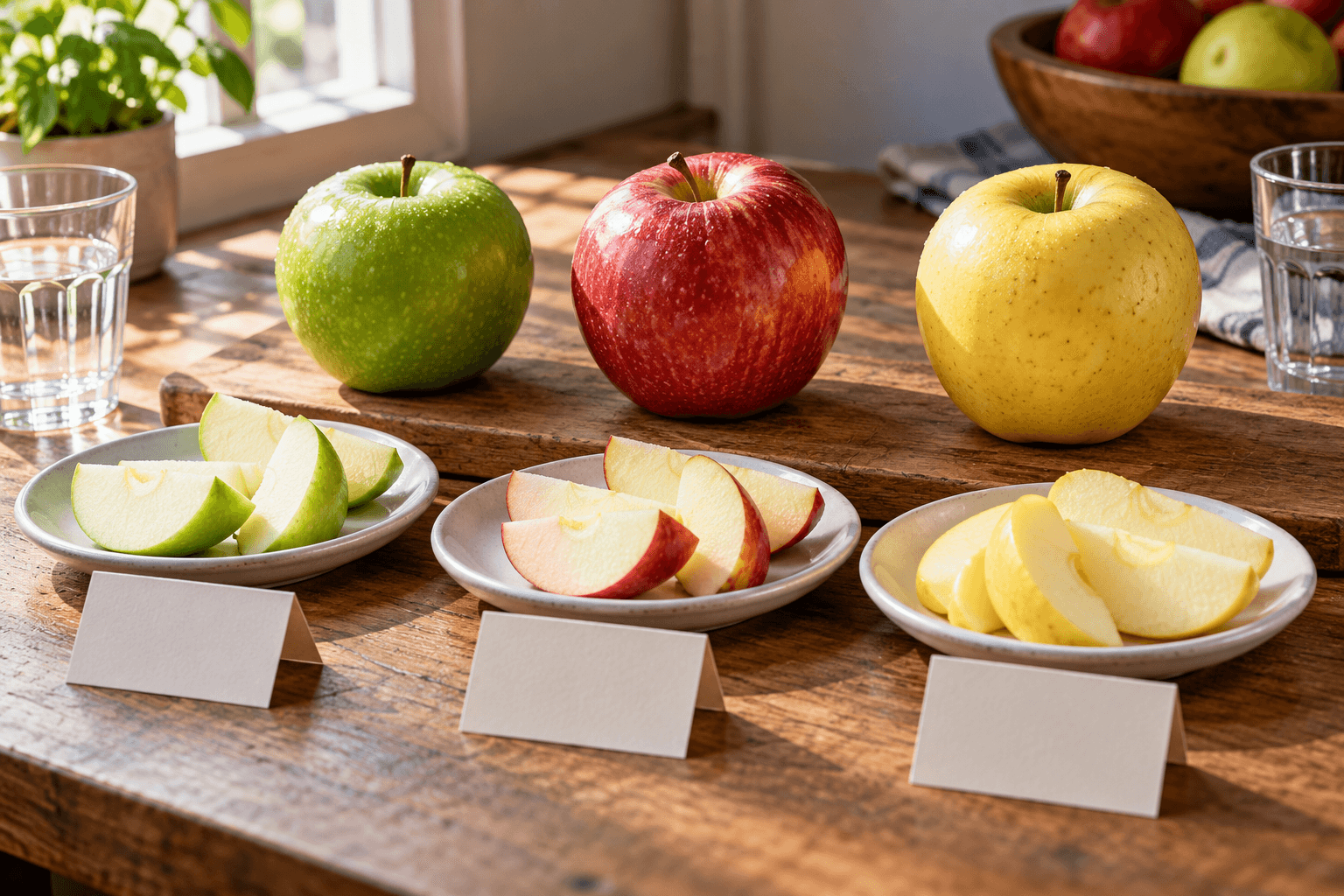
Our suggestion is two or three named varieties you can actually find, one apple of each to begin. Choose sound fruit and keep the names somewhere you can recover them. A familiar favorite beside one less familiar variety is a good comparison; there is no requirement to track down a rare apple.
Do not promise yourself what each should taste like before taking the first bite. The University of Minnesota’s variety descriptions show how apples differ in acidity, texture and juiciness, but the particular fruit in front of you also has its own harvest and storage history. This is an encounter with those apples, not a final ranking of every variety.
Prepare small, similar wedges close to the tasting time. Following FDA produce guidance, wash your hands and rinse fruit under running water before cutting; do not wash it with soap. Use clean equipment and discard rotten fruit. Keep the portions comfortable for the people taking part, especially children.
Give texture its own turn
For the first round, notice the bite before choosing a favorite flavor. Does the flesh break cleanly, resist a little or feel soft? How much juice appears? Listen to the sound if that helps. You do not need to translate every sensation into a technical score. “Crunchy, then very juicy” is a perfectly useful note.
For a second round, compare sweetness and sharpness. They do not cancel each other out: an apple can feel both sweet and distinctly acidic. Notice whether your impression changes after chewing. A plain sip of water and a brief pause can help you approach the next piece without rushing through the sequence.
We would keep the first tasting simple, without dips, cheese or seasoning. Those combinations can be a second activity later. For now, reducing the extras makes it easier to understand what you are noticing in the fruit itself.
Try one round without the names
If another person is joining, have them label the plates A, B and C and keep the variety key out of sight for a round. This does not turn a kitchen into a controlled sensory laboratory. It is simply a way to notice whether a familiar name is doing some of the choosing for you.
Write a short sentence before discussing. Otherwise the first confident opinion can become everyone’s vocabulary. Compare notes afterward and ask what each person meant by a word such as “fresh” or “soft.” Different descriptions can reveal more than agreement about a winner.
The useful question is: which apple would you choose for this particular moment? A crisp snack, a fruit to share after lunch or an ingredient you want to cook are different purposes. You do not need the same favorite for all three.
Keep the note that changes your next choice
One compact entry can be enough: the variety, purchase date, texture word and a reason you would buy it again. If you repeat the activity, note the source and approximate storage time as well. The university’s apple evaluation account emphasizes that texture and harvest timing matter; your home notes can stay much simpler while respecting that variability.
Our repeat-a-recipe journal makes a similar case for trying something again with a more specific question. Repetition becomes useful when the next attempt has one thing to notice.
Let the hobby stay small enough to enjoy
We would not buy a pile of fruit or a specialist kit for the first session. A few small bites and a real conversation are already an activity. If you enjoy it, the next experiment might be the same variety from a different source, rather than a larger and more expensive tasting.
A market can become more interesting once you know what you want to ask. Our Camarillo market guide begins with one ingredient and the meal it might become. This tasting begins even smaller: one piece of fruit and the reason you want another bite.
You may finish without agreeing on a winner. If you can say what each apple offered, the afternoon has already given you something better than a ranking.
Sources & verification
Information checked: 2026-10-16