Curated by
Hobby-ist Editorial TeamPerhaps you have a drawer of things that were too nice to throw away. A postcard from a shop. A little exhibition booklet. The wrapping paper you carefully flattened instead of putting in the recycling.
You might not describe that drawer as the beginning of a hobby. But it tells you something about what holds your attention. You notice paper, color, lettering, and the way an ordinary object can feel worth keeping.
The Los Angeles Printers Fair offers somewhere to take that curiosity. You can arrive knowing very little about printing and still have a useful way into the day: choose an object you like, then find out one thing about how it came to exist.
The October 17–18 essentials
- Dates: Saturday and Sunday, October 17–18, 2026.
- Hours: 10 a.m.–4 p.m. each day, Los Angeles local time.
- Venue: International Printing Museum, 315 W. Torrance Boulevard, Carson, CA 90745.
- Listed admission: Adults $15; students and seniors $12; children age 3 and under free. Check ticket categories and the final total before purchasing.
These details are listed in the organizer’s visitor FAQ. The official general-admission ticket page says admission tickets are valid for both days. The schedule means two daytime openings, not an overnight event.
The museum describes a fair devoted to letterpress, book arts, and paper arts, with exhibitors selling work such as prints, cards, handmade paper, and books. Its collection of antique presses supplies a fitting setting. See the museum’s event overview.
Start with the object you would keep
It is easy to turn a fair into a sequence of quick glances: look at a table, decide whether anything is affordable, move on. Try giving your first circuit a different purpose.
Find one thing you would like to live with. It might be a print you would put above your desk or a card you can already imagine sending to someone. You do not have to buy it to notice why you like it.
Be specific. Is it the narrow border? The rough edge of the paper? A color combination you would never have chosen yourself? That small observation is more useful than deciding whether you have “good taste.”
If handling is permitted, ask how to pick the piece up. Otherwise, look where it is displayed. A maker’s table is a place of work as well as a place to browse, and different objects need different care.
Three questions worth taking to a maker’s table
You do not need to prepare an expert conversation. These questions are invitations to learn, and you can use whichever one fits the moment.
“Which part did you make first?”
We often see a finished object as one decision. This question opens it into a sequence. Perhaps the image came first; perhaps the maker began with a particular paper or a book format.
Listen for the part that surprises you. If you thought the interesting work was choosing colors but find yourself fascinated by the folding, you have learned something about your own curiosity.
“What does this paper change?”
Instead of asking whether one material is better, ask what it allows the maker to do. You can point to something visible: a surface, an edge, the way a page sits when a book is open.
Let the answer give you a new detail to look for at the next table. You are building a vocabulary from things you have actually noticed.
“What would you suggest for someone trying this for the first time?”
A useful answer might be a class, a material to experiment with, or a process to read about. Ask for the name and write it down. You do not have to commit to a workshop or purchase tools on the spot.
If the table is busy, keep the exchange brief and ask whether there is a website where you can learn more. Buying something is not a condition of being curious, but a long conversation is not something a vendor always has time to offer.
Give yourself a first circuit and a return visit
Our suggested approach is to browse once, pause, and revisit the few things you remember. This is an independent way to explore the fair, not an organizer-led activity or a timed route.
On the first circuit, make short notes: the maker’s name, what caught your eye, and one question. Ask before photographing individual work or displays. A business card or a saved website may be more useful than a picture whose maker you cannot identify later.
Then take a break and see what stays with you. Do you remember the brightly printed poster, or the little book you nearly walked past? Return to that object if you have time.
This also gives purchases a little room to become decisions. Before arriving, choose an amount you would be comfortable spending on objects, separately from admission and travel. If you buy a gift, think about the person receiving it. If you buy materials, think about when you will use them.
Leave room in your bag for anything you plan to take home, and ask sellers how to protect delicate paper or larger prints. A beautiful purchase deserves a journey home that does not fold it in half.
Plan the practical parts before you arrive
The official FAQ directs visitors to parking across the street at Carson Town Center and notes accessible parking at the museum and curbside drop-off. It also lists food options and says most vendors accept cards, while recommending small bills. Consult the visitor information for current arrangements.
Save the museum’s exact address before leaving; the Los Angeles name refers to an event held in Carson. Compare your outward and return journeys, especially if you are meeting someone traveling from another part of the region.
For specific access needs, contact the museum about the route through the event and any seating or assistance you need. A parking description alone does not answer every question about navigating a visit.
Check the latest program before planning around a particular artist or activity. This guide does not promise that admission includes a hands-on workshop, that every maker will demonstrate a process, or that you will operate a press. The browsing and conversation can be worthwhile without turning the day into a class.
Bring home an experiment, too
Before the visit ends, separate two questions: what would I like to own, and what would I like to try?
Those answers may be different. You might love collecting prints but feel no desire to make one. You might be drawn to book structures even though you do not want another notebook. Either response gives you a useful next step.
For a small experiment at home, fold a sheet of scrap paper into a simple card. Use a pen you already own to arrange a few words on the front. Try a second version with the same words in a different position. Compare what changes. This is a layout exercise, not a substitute for learning a printing process, but it gives your eye something to work on.
If making is what interests you, use your notes to investigate one beginner class. Check its prerequisites, materials, cost, and what participants actually do before booking. Our guide to finding a hobby you’ll enjoy can help you keep that next step manageable.
And if the fair sends you back to your drawer of saved paper, open it. Choose one thing and finish the sentence: “I kept this because…”
You may have been collecting the beginnings of an interest for years. A conversation with the person who makes such things could be what helps you recognize it.
Information checked September 22, 2026 against the organizer’s FAQ, museum event page, and official ticket listing. This is a pre-event editorial guide, not a report from attendance. Reconfirm event details before travel.
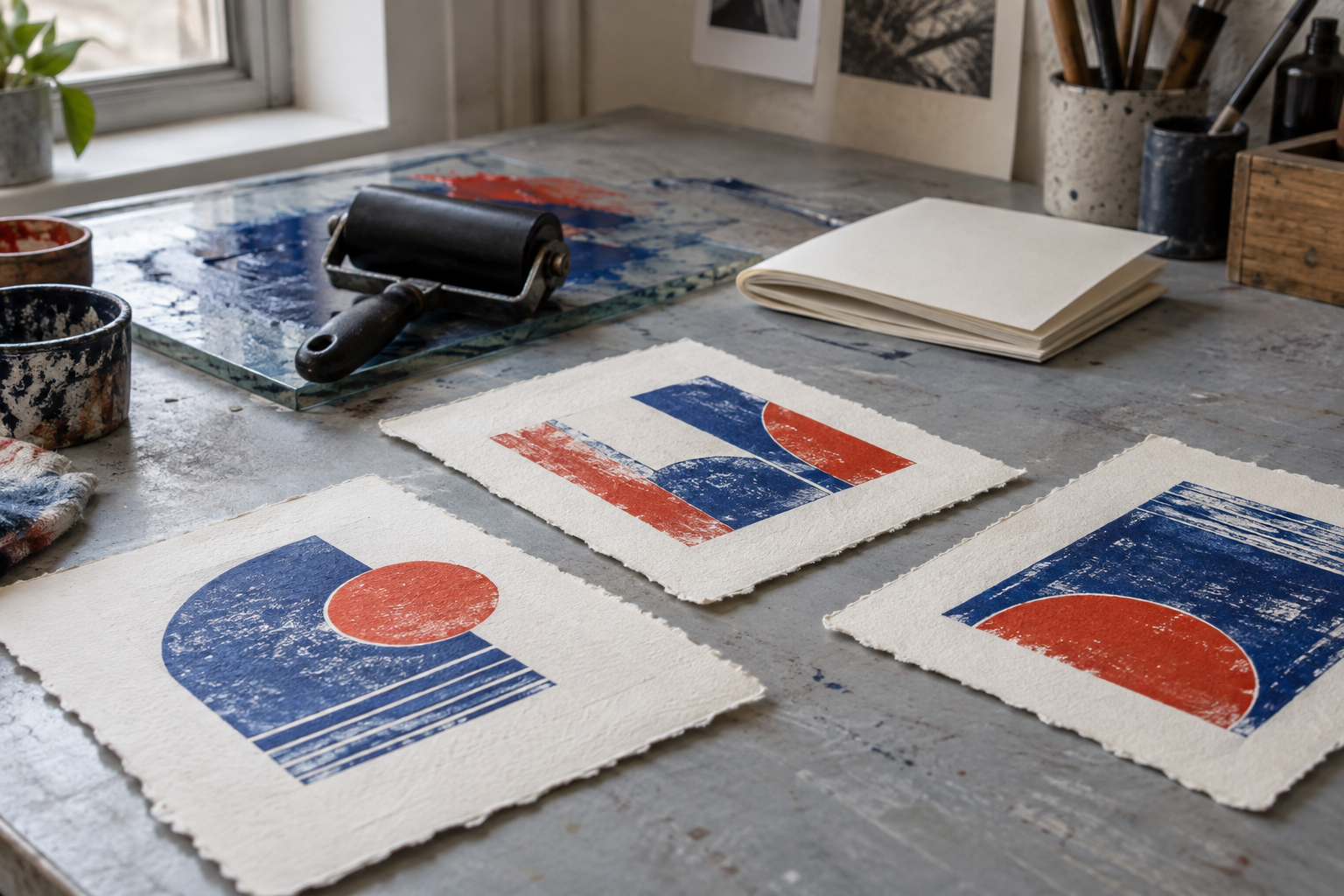
Cover: AI-generated editorial concept of a fictional printmaking workspace; not a photograph of the fair, museum, or participating artists’ work.
Sources & verification
Information checked: 2026-09-22