Perspectives
A Hobby Space in a Shared Home: Agree on Sound, Light and Resetting
Agree on when a project runs, how far it spreads and what cleared means. Try a small shared-space plan before buying more storage or equipment.
By Hobby-ist Editorial Team · 4 min read · October 6, 2026
In this story
A shared table can be a good hobby space if everybody knows when it becomes a work surface and when it becomes a table again. A storage box alone cannot settle that question. Before choosing furniture, agree on the sounds, light and cleanup other people will experience.
Why we picked it: hobby advice often measures the maker's available space while overlooking the people who use the same room. Hobby-ist proposes a small, revisable agreement. It suits ordinary portable projects in a shared home; it does not replace equipment-specific operating requirements.
Describe the activity, not just its name
“I will sew for an hour” leaves out setup, pressing, machine noise and putting needles away. Describe what happens from opening the kit to resetting the surface. Do the same for recording or growing plants: sound can occur during playback, and a lamp may run after the hobby session ends.
Our first sewing-machine session helps identify the work you will actually do. Tell the household what needs attention and what can pause. Do not assume a project is unobtrusive because it feels quiet from your chair.
Agree on a time window with an ending
Choose a proposed start, stop and reset time. Include calls, sleep, meals and other existing uses of the room. A sample agreement might be a short afternoon session with the table cleared before dinner; that is a fictional example, not a schedule we tested.
Discuss what happens when a project overruns. The useful rule is a decision in advance: pause, move a portable project, or ask for a different agreed window. “Almost done” should not silently extend the arrangement. Equipment that cannot safely pause needs an appropriate plan before beginning.
Check sound from the other person's position
Run a brief ordinary sample at the intended time, with permission, and listen where the other person works or rests. Include playback and setup sounds. Ask what interferes with the activity there rather than trying to win a comparison of whose sound is louder.
Headphones can reduce speaker playback but do not silence a sewing machine, singing or printer movement. For recording, Focusrite's monitoring explanation describes hearing the input through headphones with little delay. That is a listening route, not soundproofing. If the source itself is disruptive, change the time or location.
Give light its own agreement
A lamp useful for plants or close work can still reach another person's screen or sleeping area. Check its direction and the planned hours from those places. Do not cover or modify a fixture in ways its instructions do not permit to solve glare.
Our small herb-shelf light guide compares coverage and timer behavior. As a scoped example, the TG101 manual specifies a fixed daily cycle and keeping electrical components away from water. The point is to check the actual fixture, not assume a short crafting window controls every light in the home.
Define the footprint and the reset
Agree on the surface area, storage location and any place an unfinished project may stay. A tray can make a small footprint visible, but is not permission to occupy a walkway or shared seat. Choose containers for the real materials rather than buying storage before seeing what must fit.
Define “cleared” concretely: loose pins collected, tools stored, spills dealt with as appropriate, usable surface available, and the agreed walkway open. Include setup and reset in the session budget. Our hobby cost guide can help assess whether portable storage solves a repeated problem.
Some materials or machines need dedicated storage, ventilation or a controlled operating area. Household agreement does not make an unsuitable dining-table setup appropriate. Read the relevant instructions before choosing where they belong.
Review after a few sessions
Ask which part of the arrangement worked and which was hard to repeat. Change one thing—perhaps the stop time, lamp position or reset method—before replacing the furniture. A trial can reveal that the project belongs in a different room or outside the home.
Hobby-ist's judgment: a smaller space with a reliable reset is often more usable than a larger claim on the room. That is an editorial preference, not a universal solution. The agreement should make it easier for everyone to know what happens next and how to request a change.
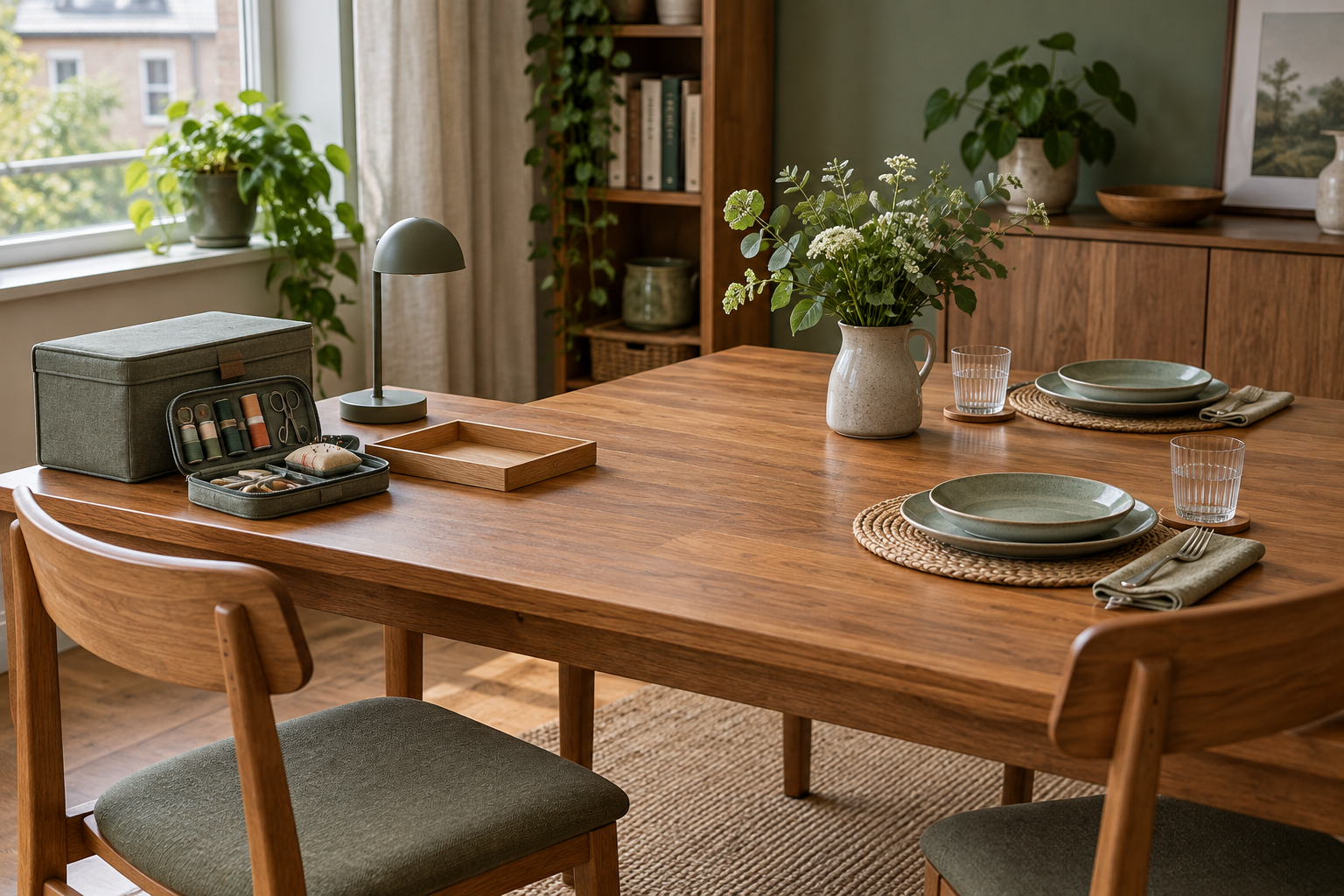
Editorial status: Researched. Product documentation informs the monitoring and light examples. The household agreement and trial sequence are editorial proposals; we did not visit a shared home or test these arrangements. The AI cover depicts an imagined home, not a documented household.
Sources & verification
Information checked: 2026-10-06