Gear & Picks
Why Your Watercolor Paper Buckles: Change the Surface Before Blaming the Paint
Rippling paper and scrubbed patches can make a first painting feel harder than it should. Choose paper for the water you use, then learn what your brush is telling you.
By Hobby-ist Editorial Team · 4 min read · October 15, 2026
In this story
You put down a blue wash, turn away to rinse the brush, and return to a small landscape of hills you did not paint. The paper has buckled. Water collects in a valley, the color dries unevenly, and it is tempting to decide you bought bad paint—or have no talent for watercolor. Sometimes the first thing to change is much less personal: the surface under the brush.
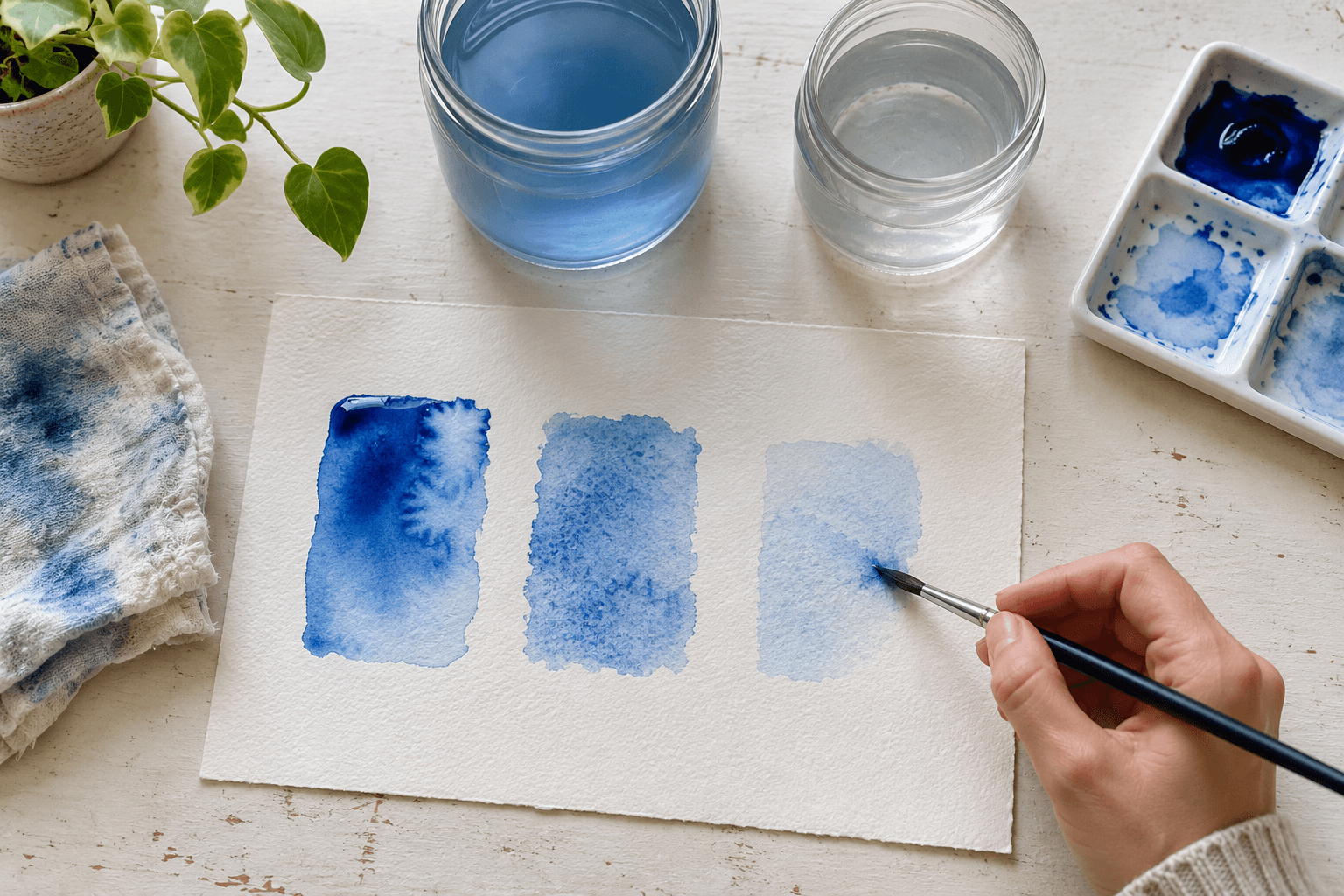
Our earlier two-blue-patches exercise explores what water does on dry and damp paper. This is the next question: what if the paper itself makes that difference hard to control? Before expanding a paint collection, choose a surface that can reasonably handle the way you want to work.
Paper is part of the painting
Winsor & Newton's paper guide distinguishes smooth hot-pressed paper from the more textured cold-pressed surface and explains why watercolor paper is made to cope with water. That does not mean every watercolor sheet stays perfectly flat under every wash. Size, weight, wetness and the way the sheet is held all affect the experience.
A useful beginner starting point is a small pad marked for watercolor, around 300 gsm or 140 lb. This is our practical shopping suggestion, not a requirement or a guarantee against buckling. A postcard-size painting asks less of a sheet than a large wash. Buy a few sheets or a small pad before committing to a box simply because it works out cheaper per page.
Look for the surface description as well as the weight. Cold-pressed paper offers visible texture and makes a reasonable starting point for washes. Hot-pressed paper is smoother and can suit fine lines and detailed work. Neither surface is the advanced version of the other. A person drawing crisp botanical details and someone enjoying loose skies may reasonably prefer different papers.
Try the paper you have, but ask a fair question
You do not have to throw away an existing sketchbook. Use its dry pages for planning, pencil sketches or very light color. The useful question is whether it fits this task. A notebook that is pleasant for pen may struggle with repeated soaking; changing your technique to rescue it can obscure what you are trying to learn.
For a suggested comparison, take two small pieces: your current paper and a watercolor sheet. Use the same brush, color and modest amount of water. Make one wash on each and leave them alone to dry. Compare how much they ripple, whether water pools, and what the dried edge looks like. This is a comparison you can make, not a laboratory test we have performed on particular brands.
Do not judge by the wet image alone. A sheen can make weak color look wonderfully saturated, while a drying patch may settle into a useful texture. Wait before deciding you need to add more paint. The habit of returning repeatedly to a half-dry area is often more frustrating than accepting an uneven first wash.
The brush can tell you when to stop
If fibers begin to lift or little pills appear, stop scrubbing. More pressure is unlikely to restore the original surface. Let the area dry and decide whether it can become part of the picture, be covered by a later mark, or remain a note about what happened. A damaged patch is information about an action, not a verdict on the whole painting.
When a wash pools, first think about quantity and scale. Was the brush carrying more water than that small shape needed? Would a smaller painted area be easier next time? Before buying a thicker sheet to solve everything, try loading the brush with less water on a scrap. Paper and handling work together; changing both at once makes it harder to know which change helped.
Support the sheet on a flat, water-resistant board if needed. Tape can help hold edges, but it can tear delicate surfaces; test it on a spare corner and remove it carefully when dry. Ordinary tape around a dry sheet is not the same process as properly stretching watercolor paper. If you move into large, wet washes, the manufacturer's stretching guide explains the more involved preparation. You do not need to begin there to paint a small pear.
A small purchase that changes the right problem
We would put a modest watercolor pad ahead of a much larger paint set when a beginner already has a usable brush and a few colors but is fighting the page. If you enjoy drawing with only a touch of water, a new surface may be less urgent. Choose for the wettest part of the work you actually want to make, not for an imagined future studio.
Keep one successful scrap beside the pad, along with its packaging or paper name. It is easier to repeat a pleasant experience when you know what you used. If the table is becoming crowded with supplies, our shared hobby-space guide can help the painting fit your home as well as your page.
The reward is not perfectly flat paper at all costs. It is reaching the point where a spreading blue edge makes you curious about water, rather than suspicious of your ability. Better-matched paper leaves you more attention for the picture.
Materials references checked October 14, 2026. Follow the instructions supplied with your paper and art materials.
Sources & verification
Information checked: 2026-10-14