Gear & Picks
Your First Birding Binoculars: Why 8x Can Be More Useful Than More Zoom
The best first binoculars help you find the bird and keep watching it. Compare reach, comfort and field of view before treating a larger number as an upgrade.
By Hobby-ist Editorial Team · 4 min read · October 15, 2026
In this story
You can see the bird perfectly well until you raise the binoculars. Then there are leaves, a strip of sky and no bird. Lower them and there it is again, apparently waiting for you to repeat the same mistake. A first pair of binoculars needs to help with this moment, not just make a distant sign look impressively large.
That is why we would begin a casual birding search with 8x models rather than automatically choosing more magnification. The useful image is the one you can find, hold steadily and enjoy. A specification only earns its place when it improves that experience.
Read the two numbers differently
In an 8x42 description, the first number is magnification and the second is the objective lens diameter in millimeters. It is not a score out of ten followed by a quality grade. Similar numbers can describe binoculars with quite different comfort and optical quality, so compare actual pairs rather than buying the arithmetic alone.
The Cornell Lab's selection guide describes 8x as a useful balance for many birders: a steady image with a broad view. It notes that 10x can help for more distant shorebirds, seabirds or raptors, while narrowing the view and making shake more apparent. That is a tradeoff, not a reason to declare either magnification universally better.
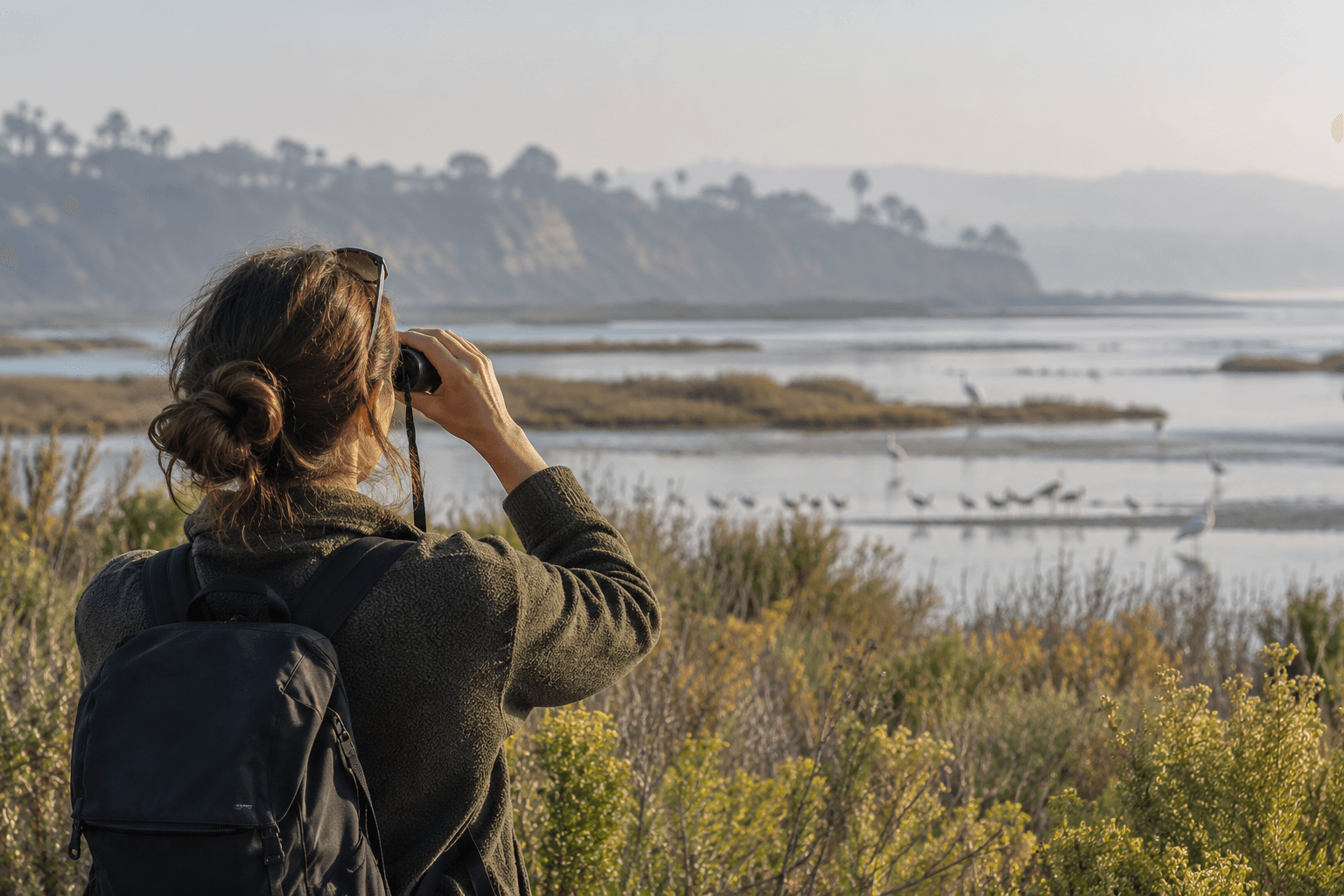
If you imagine wandering through a park, finding birds in shrubs and watching them move, start by trying 8x. If you mainly expect to look across an open wetland at distant birds, compare 10x as well. Match the view to the distance you actually have, not the rare impressive animal you hope might someday appear.
The fit test matters more than the box
Try binoculars with the glasses you normally wear. Adjust the distance between the barrels until the view becomes one comfortable circle. Set the eyecups as the maker recommends, then focus on a stationary object. If you are using a diopter adjustment, follow that particular model's instructions rather than turning every ring until something looks different.
For a suggested in-store comparison, look at the same detailed object with two candidates. Can you see the whole view without pressing the binoculars hard into your face? Does the focus wheel move comfortably under your finger? After you look away and raise them again, how quickly do you find the object? This is a test you can make; it is not a claim that we have reviewed particular models.
Keep them raised long enough to notice grip and balance. A pair that feels manageable for five seconds can feel different during a long watch. With permission, try looking outside rather than judging only by a bright shop wall. Check the seller's return conditions and the manufacturer's warranty before relying on a brief indoor tryout.
Smaller can mean more outings
The Cornell size comparison distinguishes full-size, compact and pocket formats. Our practical question is what you will carry on an ordinary walk. An 8x32 may fit your routine more easily than a larger pair; a pocket model may travel everywhere but feel less comfortable at your eyes. Physical fit and intended light conditions matter alongside size.
Do not buy the biggest pair simply because it looks serious. Imagine the bag you normally take, your walking route and how often you want the binoculars ready rather than packed away. Include a comfortable strap and the lens covers in that picture. An accessory you immediately replace belongs in the real cost.
If you already own a pair, try them before shopping. You may discover that the urgent problem is an unfamiliar focus adjustment, or that you enjoy watching in daylight without needing an upgrade. Borrowing with permission or joining a beginner walk can also show you what you want to change. Keep a borrowed pair's strap secure and ask how its owner prefers it handled.
Find the bird before raising the view
On a safe stopping spot, first locate a stationary detail with your eyes. Keep looking at it while bringing the binoculars to your face, then focus. Practice on a sign or a branch before asking yourself to follow a small moving bird. If you lose the subject, lower the binoculars and find it again rather than sweeping around through a magnified view.
Stand still while viewing and keep to permitted paths. Never point binoculars at the sun. Watch birds from a respectful distance and let the equipment bring the view closer instead of walking into a resting or nesting area. More magnification is useful only if it helps you leave the animal's space intact.
If looking closely is what you enjoy, our Spider Pavilion story explores another scale of wildlife attention. If you want to bring that attention into pictures, choosing among a small group of photographs can help you see what actually interests you.
Hobby-ist's starting pick is a comfortable 8x pair for a casual first birding habit, with 10x considered for a clear distance need. The right purchase is the pair that lets you stay with the bird after the first surprise of finding it.
Optics references checked October 14, 2026.
Sources & verification
Information checked: 2026-10-14