Gear & Picks
Turf Shoes or AG Cleats? What Playing in Both Changed for Me
I expected turf shoes to be the safer, more comfortable choice on artificial grass. After trying several pairs and comparing them with AG cleats, my knees and my movements told a different story.
By Hobby-ist Editorial Team · 6 min read · October 9, 2026
In this story
I thought turf shoes would be the safer choice. But the shoes that felt more comfortable for my body were AG cleats.
When choosing soccer shoes, we tend to ask familiar questions: Do they fit? Are they light? How do they feel on the ball? If you play on artificial grass, another question joins the list.
Should I wear turf shoes, usually marked TF, or artificial-grass cleats marked AG?
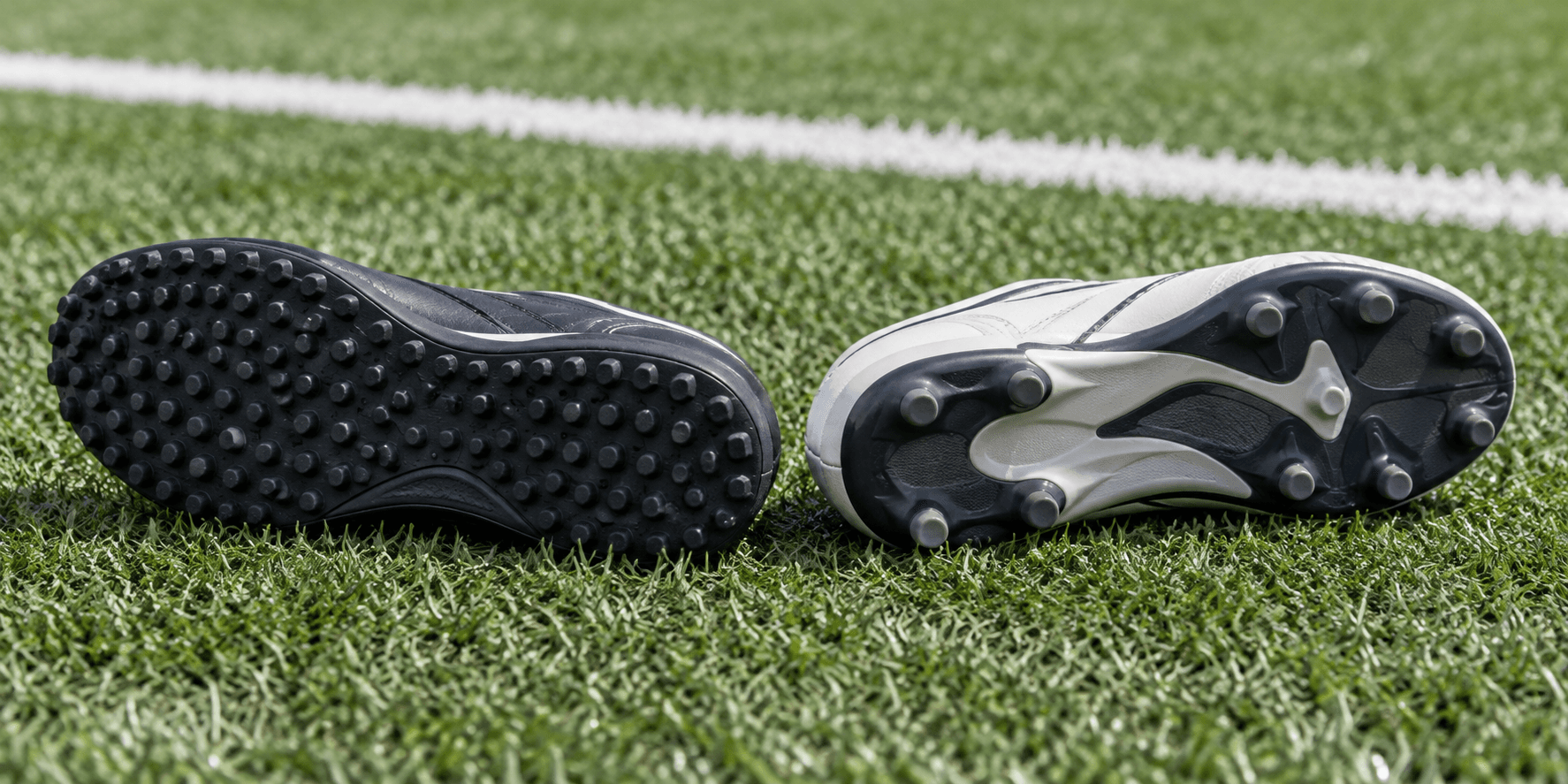
At first, turf shoes seemed the more sensible option to me. Their small, closely spaced rubber nubs looked less imposing than studs. I expected them to feel safer and put less strain on my knees and ankles. Even the name made the decision sound straightforward.
Playing in several pairs changed my mind. On the pitches where I played, turf shoes sometimes felt more slippery than I expected, and the impact underfoot did not feel sufficiently softened. After wearing AG cleats and comparing the two, I came to prefer AG for the way I play.
That experience does not give everyone the same answer. What it taught me is that “artificial grass” covers too many different surfaces—and players move in too many different ways—for one shoe label to settle the question.
The disappointment was not limited to one pair
I did not reach this opinion after trying a single turf shoe that happened to fit poorly. I have worn several, including adidas F50 and Nike Phantom and Premier turf shoes.
They felt different from one another. Still, in my playing conditions, there were times when turf shoes left me wanting more grip or more comfortable impact absorption. My feet sometimes slipped, and I felt as though the impact of running was traveling into my knees and ankles.
Soccer involves much more than running forward. You slow down, turn back toward a pass, follow an opponent and change direction again. For someone like me, who makes frequent changes of direction and sprints often, what happens underfoot during those movements matters a great deal.
A shoe that feels comfortable while standing or walking does not necessarily feel comfortable when I play.
What felt better in AG cleats
When I wore AG cleats and compared them with turf shoes, my knees felt less painful. Changing direction felt easier, and sprinting felt better too.
Those differences mattered because they were what I wanted from soccer footwear: to think less about my feet, change direction when I needed to and run comfortably.
If you make frequent cuts and sprints on a pitch suitable for AG footwear, I would recommend comparing AG cleats with turf shoes. For me, the expectation I had before playing did not match the feeling I had once I was moving.
But less knee discomfort in my experience does not establish that AG cleats protect everyone's knees. Fit, shoe construction, pitch conditions and the amount of exercise can also matter. What I can describe is my own comparison: AG felt more comfortable for my movements.
Grip and cushioning are separate questions
The turf shoes I wore sometimes felt short on impact absorption. That does not mean all turf shoes lack cushioning.
There are TF models with cushioning materials in their midsoles. Nike, for example, specifies ReactX foam in the Phantom 6 Low Pro Turf shoe. Cushioning construction can differ within the same footwear category. See the official Nike product description.
That leaves two questions to ask separately: Does the shoe give me suitable grip when I move? And does the impact of playing feel comfortable?
You might like the grip but dislike the impact underfoot. You might like the cushioning but feel your feet slip during a turn. An AG label alone does not tell you that a shoe has better cushioning.
I want a shoe that works with the surface and feels comfortable through a game. One quality alone was not enough for me.
Look at the pitch before buying the shoe
Before turning this story into an AG shopping decision, look at the pitch you use most often.
A short, firm, carpet-like artificial surface is different from a pitch with longer synthetic fibers and infill. Manufacturers distinguish these uses. Nike describes turf outsoles for shorter, firmer artificial surfaces and AG outsoles for modern 3G and 4G artificial-grass pitches. Its official soccer shoe guide is a useful starting point.
This is an important limit on how to interpret my experience. Slipping in turf shoes on a short surface does not establish that AG is the better choice for every short artificial pitch. Short, firm artificial surfaces are a typical intended use for TF footwear.
The amount of rubber infill visible on the surface is not enough to choose a shoe either. A surface feeling slippery to me is a personal observation; saying that rubber-rich pitches always make turf shoes dangerous would be a much broader claim.
Look at the grass length and infill condition, then check the facility's footwear rules alongside the manufacturer's intended-use guidance. My preferred shoe still needs to be appropriate for the pitch.
What if your ankles often roll?
If your ankles often roll, I would keep turf shoes among the options to compare. Some players may feel more comfortable in a shoe with a low rubber-nub outsole.
There are conditions, though: the shoe needs to suit the surface and feel stable in actual movement. Low nubs alone do not establish that a shoe is safer for your ankles.
Repeated ankle rolling deserves attention beyond the outsole label. Consider whether your foot moves inside the shoe, whether the heel is held securely and whether you have fully recovered from a previous injury. The American Academy of Orthopaedic Surgeons emphasizes rehabilitation after sprains and footwear with support appropriate to the activity. If pain or instability keeps returning, seek professional advice. See AAOS guidance on ankle sprains.
“TF should be fine” is too simple an answer. The more useful question is whether that person can move comfortably and reliably in that shoe on that surface.
How I would compare my next pair
If I were choosing again, I would not decide only from the first comfortable steps in a store.
I would first check whether the outsole suits my regular pitch, then look at the fit around the forefoot and heel. On the pitch, I would start with gentle running and slowing down during a warm-up, increasing the movements gradually. There is no need to test a new shoe with an immediate all-out sprint.
The things I would watch for are simple:
- Does my footing feel unreliable when I slow down or change direction?
- Does my foot or heel slide inside the shoe?
- Do my feet, knees or ankles become uncomfortable as I keep moving?
If I feel slipping or pain, I do not want to brush it aside with “a few more games will fix it.” The difference that changed my thinking came from playing, rather than from reading a product description.
My preference is AG, with the pitch checked first
After wearing several turf shoes and comparing them with AG cleats, I personally find AG better suited to my frequent changes of direction and sprints. My knees felt less painful, and moving felt more comfortable.
That was not what I expected when I first chose turf shoes. I looked at their low nubs and assumed they would be the more comfortable, safer option. Once I was actually playing, I preferred the feeling of AG.
If someone asks me what to wear on artificial grass now, I would first ask where they play and how they move. Then, if possible, I would suggest comparing both types on suitable surfaces.
AG was the better choice for me. When I choose my next pair, I will use that experience alongside the requirements of the pitch I play on.
Written from the Hobby-ist operator’s own experience wearing turf shoes and AG cleats. Manufacturer guidance was checked on October 9, 2026.
Sources & verification
Information checked: 2026-10-09