Gear & Picks
Your First Sewing Tools: Buy a Kit or Build Your Own?
Choose tools for one small project, then compare a kit with the items you already own. Check useful cutting, measuring and unpicking tools before counting pieces.
By Hobby-ist Editorial Team · 4 min read · October 6, 2026
In this story
A box with many pieces looks like a quick way to become ready to sew. The useful question is whether those pieces let you do the next project. A repair pouch, a machine accessory kit and a general sewing kit may solve different problems even when all are described as starters.
Why we picked this comparison: beginners can buy duplicates while still missing a tool that makes cutting or measuring manageable. Hobby-ist would choose for one small woven-fabric project first. This guide suits a first home sewing setup; garment fitting, quilting and specialist fabrics require a more specific list.
Start with a project and an inventory
For our cloth napkin project, list the jobs: measure a square, mark and cut it, hold the folds, stitch, remove a mistake and press the fabric. Check what you already have for each job. An ordinary straight ruler can help measure a small flat project; a flexible tape earns its place when measurements need to follow a curve or a body.
Open the machine accessory compartment and compare its contents with the manual. You may already have a seam ripper, bobbins or other accessories. Our first machine session starts with the model's instructions, which also matter when buying replacement needles and bobbins.
Choose cutting and measuring tools you can use
Look for scissors intended for fabric, with a size and handle you can comfortably control. If possible, ask to try them on the type of scrap you plan to use. A large pair is not automatically better for a small project or your grip. Keep a separate option for cutting paper so your fabric tool has a defined job.
Check that ruler and tape markings are readable and match the units in your project. Decide how you will mark the fabric, too. Follow the marking product's instructions and test removal on a scrap; a mark that looks faint now may still be visible after finishing. A kit photograph does not establish cutting quality or comfortable handling.
Pick a way to hold fabric and undo stitches
Pins and sewing clips both help hold layers, but they do not behave identically. Pins can hold away from an edge and leave punctures; clips hold accessible edges and can become awkward in tight spaces. Choose for the material and seam rather than buying both in large quantities. Remove either before it reaches the machine needle.
A seam ripper provides a way to remove unwanted stitches. Learn on a scrap and work slowly so the fabric is not cut along with the thread. Keep sharp tools capped or closed where possible, and collect pins and needles when resetting the work surface. A small container that actually closes may be more useful than a decorative organizer.
Read the contents, not the starter label
SINGER's kit guide describes common sewing-kit contents. By contrast, Brother's SASCKIT1 listing includes machine-oriented items such as thread, needles, bobbins and accessory feet. These examples show why a name alone does not tell you whether a box covers your basic cutting and measuring needs.
Compare the exact current list with your inventory. Check whether included needles, bobbins and feet are compatible with your machine and intended fabric. Hand-sewing needles do not replace machine needles. We have not tested either kit, checked current prices or ranked their performance; they illustrate different scopes.
Compare the cost of useful items
A kit can suit someone starting without supplies who values one purchase and a case. Buying separately can suit someone with several usable tools already, or someone who wants to choose scissors for their hand. Its drawback is more shopping and potentially separate delivery charges.
Write two actual totals: the kit plus anything still missing, and the separate useful items plus delivery and applicable tax. Follow our hobby budget guide to keep materials and recurring supplies visible. Dividing a price by every counted pin is not a useful estimate of the tools you will use.
Leave specialist tools for a named need
A rotary cutter also needs an appropriate mat and handling routine; special rulers and feet belong to particular tasks. Wait until you can explain the job an addition will do. This does not mean every optional tool is unnecessary. It means the first purchase should leave you able to start rather than owning a broad collection.
Hobby-ist's judgment: buy the smallest complete setup for your next project, whether it comes in one box or several purchases. Before ordering, confirm cutting, measuring, holding, stitching, unpicking and pressing arrangements. A toolkit is only part of that setup; use the fabric and equipment instructions for pressing.
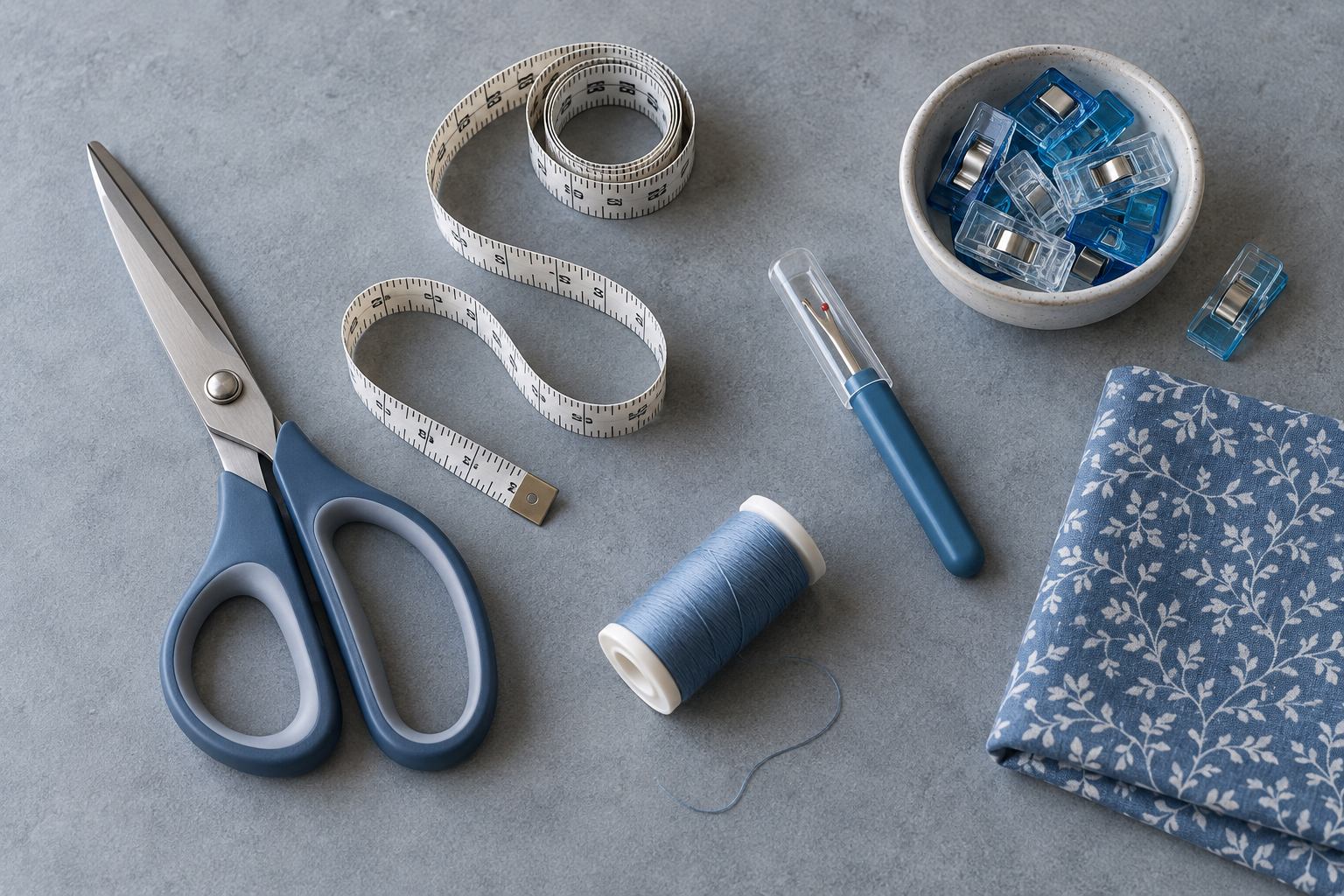
Editorial status: Researched. Manufacturer kit descriptions inform the comparison; the shopping framework is our editorial assessment. We did not handle or test these products. No affiliate links are included. The AI cover is a conceptual tool arrangement, not a reviewed kit.
Sources & verification
Information checked: 2026-10-06