Ideas
A 30-Second Sound Diary: Make a Small Piece from Everyday Sounds
Choose one ordinary sound, give it a beginning and an ending, and save a piece you can replay. A small recording exercise before buying more gear.
By Hobby-ist Editorial Team · 6 min read · October 6, 2026
In this story
A sound diary is a short piece made from something you noticed, rather than a report of everything that happened. A page turning, a drawer closing, or your own pencil moving can give a small ordinary moment a beginning and an ending. Hobby-ist proposes a 30-second limit so the first project has a clear stopping point; it is an exercise, not a required format.
Why we picked it: it gives a first recording a purpose without requiring a song, a script, or another purchase. The interesting decision is what to leave in. The limit also exposes a drawback: a sound that feels memorable to you may be repetitive to somebody else. A brief written note can provide context without adding narration.
Choose the version that fits today
This exercise suits beginners who can make and replay a short recording and want to try arranging it. If finding the record button or saving a file still takes all your attention, begin with our first home recording session. Finish one playable file before making a montage.
Pick one continuous scene if you want a simple listening diary. Pick three short details if choosing an order sounds appealing. Hobby-ist recommends the single-scene version for the first attempt: it asks you to select a useful start and finish before also managing transitions. A polished podcast or music track needs a different scope; this project does not promise those results.
Find one sound you can control
Start with an ordinary action of your own in a place where you can pause and listen: turning a few pages, opening a drawer, or putting pencils into a cup. These are prompts, not recordings we have tested. Listen first. Is the detail distinct, or is another sound covering it? Move the phone or change the location and make a short comparison before committing.
Keep the first piece free of other people's conversations, identifying announcements, background television, and music. For this exercise, choose another moment if they are audible. There is no need to turn a crowded cafe into your first recording problem. Private spaces with permission and a sound you make yourself give you more control; outdoor recording adds wind and movement to manage.
Set the phone or recorder securely, leave its microphone openings clear, and avoid touching it during the useful portion. Do not place it where water, heat, traffic, or moving equipment makes recording awkward. Listen to a short test at a comfortable playback level. If the useful action sounds distorted or masked, change the setup and record again instead of planning to repair everything later.
Record more than the final thirty seconds
For a first attempt, try capturing roughly 45–60 seconds, with a few quiet seconds before and after the action. That is our suggested allowance for choosing a cut, not a technical minimum. You can stop sooner if you already have what you need. Name the recording with a date and a plain description such as “desk-pages-take1”; avoid putting a private address in the filename.
Write one sentence while the context is fresh: what you noticed, where in general it happened, and what you want the listener to hear. “The pages get quicker before the book closes” is more useful for this exercise than “nice sound.” Preserve the original recording and work on a copy so a poor edit does not become your only version.
Build a small beginning, middle, and end
Our proposed single-scene outline is 0–5 seconds to settle into the sound, 5–25 seconds for the main action, and 25–30 seconds to let it finish. The divisions are an example, not three mandatory edits. A natural action can carry the whole sequence. Trim dead time until the reason for listening arrives promptly, then keep enough of the ending to avoid cutting the action mid-gesture.
If you choose three details instead, try one quiet establishing sound, one contrasting action, and one closing sound, with about ten seconds available for each. The actual clips may be shorter, with a brief gap between them. Start with clips placed in sequence. Layering them is optional and makes it harder to tell which sound needs adjustment.
Audacity's official editing guide explains importing audio, removing sections, and moving clips. Its interface can differ by version, so follow the guide for your installed app rather than relying on an unexplained shortcut. A recorder with simple trimming may be enough for one scene. Check that a phone recording's format is supported before choosing a desktop editor; Audacity notes that formats such as M4A may require FFmpeg.
Listen once for the story and once for the cuts
First, play the whole piece without looking at its waveform. Can you identify the detail you meant to keep? Does the ending feel intentional? If it becomes tiresome halfway through, reduce repetition rather than adding effects to fill thirty seconds. The limit is a ceiling for this exercise; a clear 22-second result is useful too.
Next, replay the joins and ending at a comfortable level. Listen for abrupt cuts, sudden level changes, handling noise, and unwanted speech. Adjust one problem at a time and compare with the previous version. A transition that still sounds distracting may be a reason to use a simpler clip. Do not treat a large waveform as proof that the recording sounds good.
You can keep the diary privately. If you plan to share it, listen again for personal information and unintended voices before publishing. A short description of the scene can help a listener understand the piece; it should describe the recording you actually made, not invent a dramatic story around it.
Save the editable work and a playable file
A saved editing project and an exported audio file serve different purposes. Audacity's saving and exporting guide distinguishes the project you can return to from the audio file played in other applications. Keep the original, the editable project if your app uses one, and an exported listening copy. Use a format supported by your intended player, then reopen the export and check its length, beginning, and ending.
Do not buy a microphone because this first piece is imperfect. Note the specific obstacle—handling noise, an inconvenient setup, or a sound you could not isolate—and try another recording first. Our hobby budget guide can help if a repeated limitation later justifies spending. If feedback would help more than gear, use our self-study versus class guide to choose your next kind of support.
Hobby-ist's final judgment
Keep the version that makes one ordinary detail worth hearing again. The first success is a finished, replayable piece and a note about one decision you would change. Make a second diary on another day before turning this into a daily streak. A small archive of chosen moments can be more satisfying than a folder filled because an app asked you to keep recording.
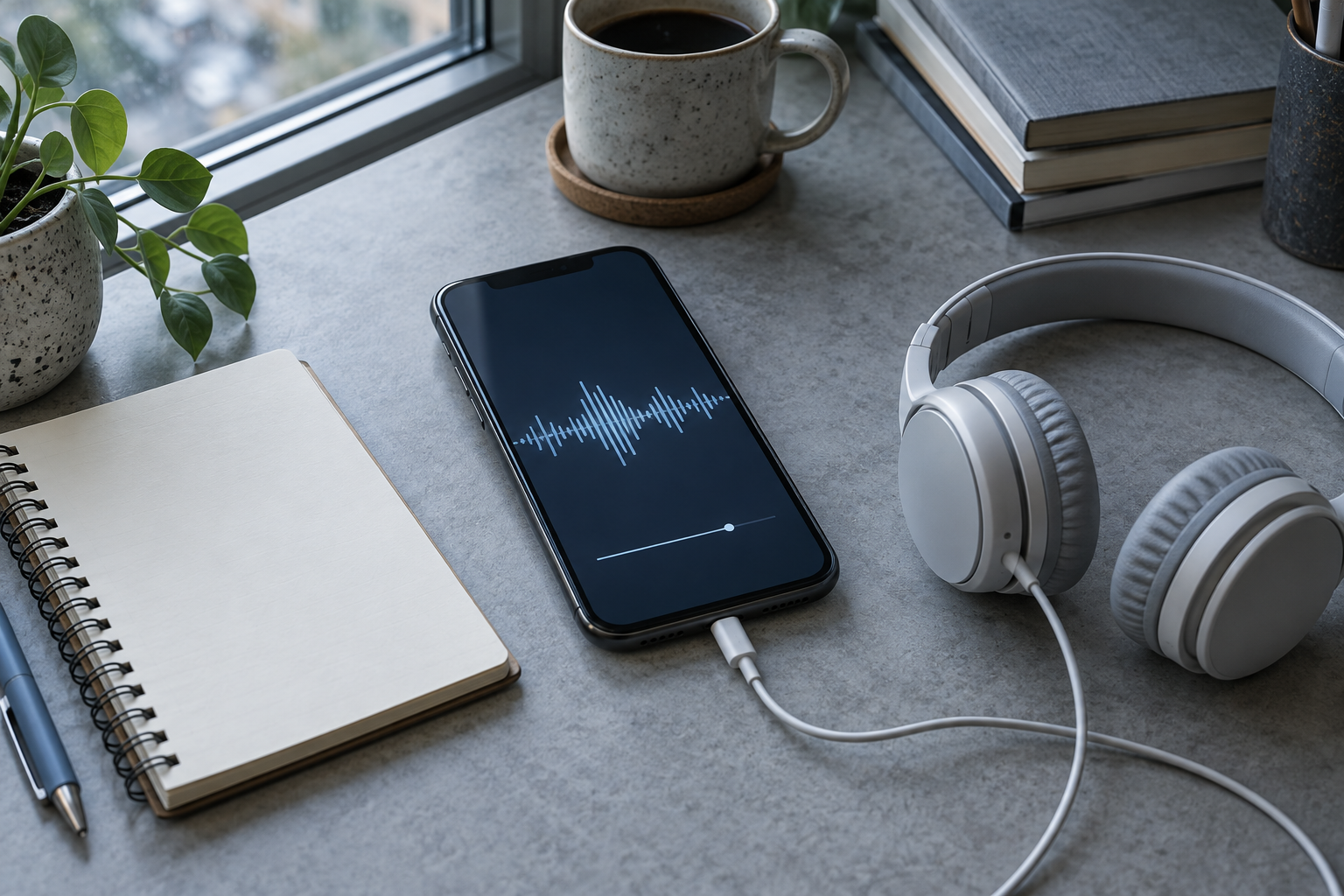
Editorial status: Researched. Official Audacity documentation informs the editing and saving notes. The recording prompts, timing outline, and review checklist are Hobby-ist's proposed exercise; the team did not record or listener-test this project. The AI-generated cover illustrates the idea and is not a photograph of a field recording session.
Sources & verification
Information checked: 2026-10-06