
Curated by
Hobby-ist Editorial TeamThe first watercolor purchase is easy to imagine: a tidy paint box, a good brush, paper that feels too special to use. The first afternoon of painting is harder to picture. What will you paint? What happens when the color goes somewhere you did not intend? Will you enjoy the process enough to set everything out again?
A class can help answer those questions before the shopping begins. For a first visit, the most useful thing to bring home might be a page of experiments and one technique you want to try again.
A Westwood-area class to consider
Viator lists Jennifer Cunningham Art’s Exclusive Los Angeles Art Class Adventure, a private watercolor session with materials included, from $65 per person. The listing describes English instruction, color mixing, brush control and layering. It gives 2265 Westwood Boulevard as the meeting address. These details were checked September 28, 2026; prices and availability can change.
One detail needs clarification before booking: the overview says 75 minutes, while the duration field says approximately 90 minutes. Confirm the teaching time and start time with the provider rather than scheduling a tight appointment immediately afterward.
View this watercolor class on Viator.
Arrive with a question, not a masterpiece
It is tempting to choose an elaborate reference image as proof that the class will be worthwhile. A smaller question can give the session a clearer purpose. Try: “How can I tell whether my brush has too much water?” or “What should I look for before adding another layer?”
These are questions to ask the instructor, not promises about a fixed lesson plan. Tell the provider that you are new and explain what you hope to understand. If you have a particular subject in mind, ask whether it fits the session before bringing a reference.
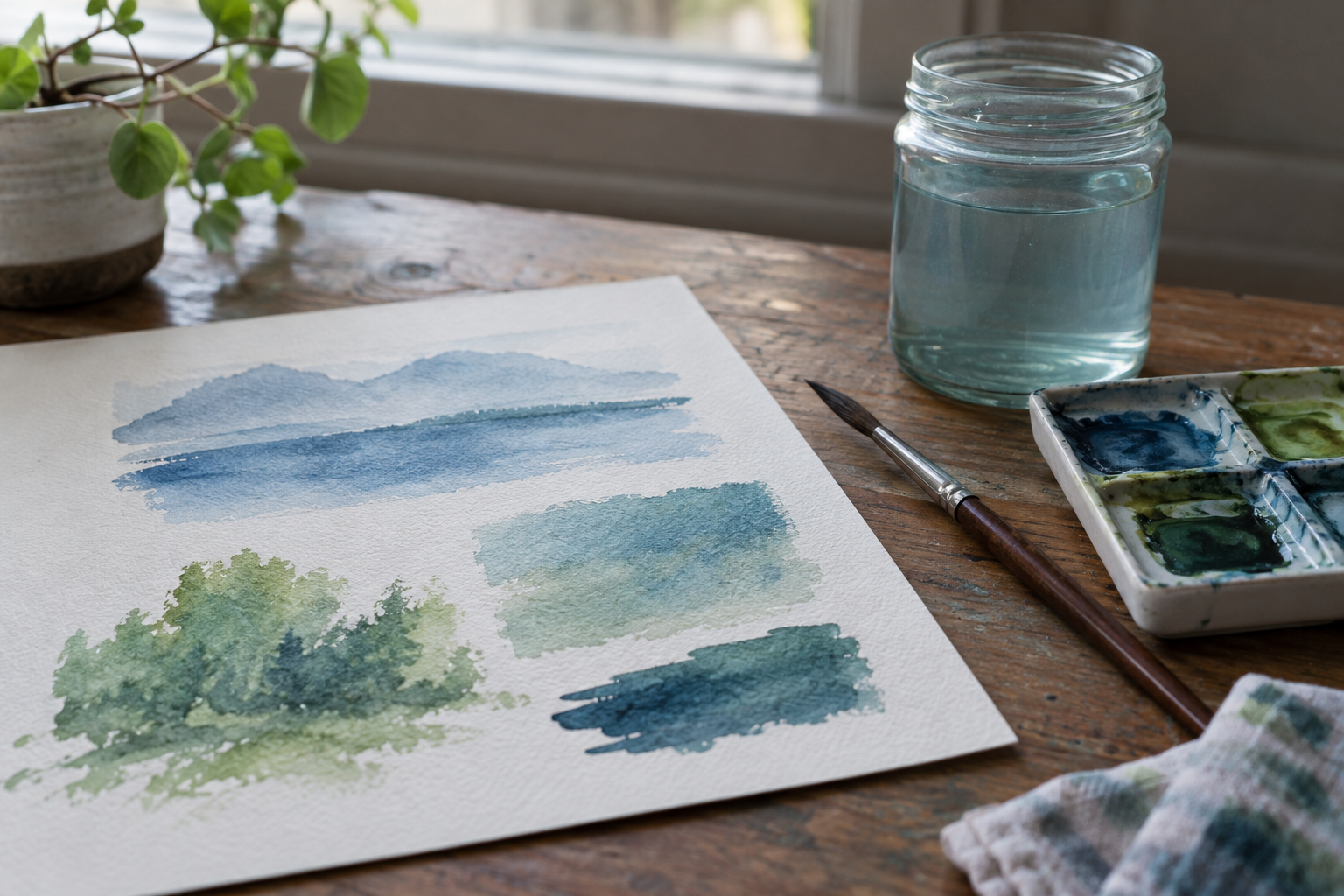
During the lesson, keep a small practice area on the page if the instructor agrees. A strip showing what you tried can be more useful at home than a finished image whose steps you cannot remember. Give the experiment a plain name: “more water,” “second attempt,” or “waited longer.” You are building your own reminder, not preparing an exhibition label.
Decide what kind of help you actually want
This is a candidate for someone curious about the material who wants a chance to ask questions. It may also appeal if buying supplies feels like an obstacle: you can try the medium before deciding what deserves space at home.
It is less obviously the right choice if you want a lively social event, a long course with weekly assignments, or a guaranteed reproduction of a particular painting. A private session is not automatically a substitute for any of those. Ask how the class works for your party, who will teach it and whether instruction will be adapted to different experience levels.
If you are booking with a friend, agree on the purpose first. One person may want focused instruction while the other imagines an afternoon of conversation. Neither expectation is wrong; making them visible helps you choose a suitable experience.
Leave room around the appointment
Before paying, confirm the studio entrance, arrival instructions, any parking arrangements and the cancellation terms shown for your selection. The listing currently advertises cancellation up to 24 hours before the experience, but the terms attached to your booking are the ones to read.
Ask how your work will travel home, too. Will it be dry by the end? Should you bring something to keep the paper flat? Those small practical details matter more than arriving with extra paints that may not be needed.
Avoid turning the class into a test you must pass before a packed afternoon. Give yourself enough time to finish, ask a final question and put things away without rushing.
Make the next painting easier to start
Before leaving, write down the names or specifications of the supplies you actually enjoyed using. Then ask which of them are essential for one simple repeat exercise. That is a more useful shopping list than “everything on the table.”
At home, plan a modest second session: repeat one experiment, label the date, and stop while you can still identify what you want to try next. You do not have to turn a pleasant class into a daily practice or a new identity immediately.
If drawing and painting still appeal afterward, our beginner sketching-kit guide offers another way to think about a manageable starting setup. Watercolor and sketching need not become one shopping project; choose the activity you actually want to return to.
HOBBY-IST has not taken this class. This is an editorial planning guide based on the linked product listing, with our own suggestions for approaching a first lesson.
Sources & verification
Information checked: 2026-09-28