Ideas
Eight Little Pages for Something You Cannot Stop Noticing
A one-sheet zine can be about the objects by your door, your favorite bus seat or the color you keep seeing. The interesting part is deciding what follows what.
By Hobby-ist Editorial Team · 4 min read · October 18, 2026
In this story
A page about the same doorway can be dull. Turn the page and show the shoes gathered beneath it, then the key that never makes it onto its hook, and a small story begins. Nothing extraordinary has happened. Someone has simply decided that one thing should follow another. That decision is a satisfying place to begin making a zine.
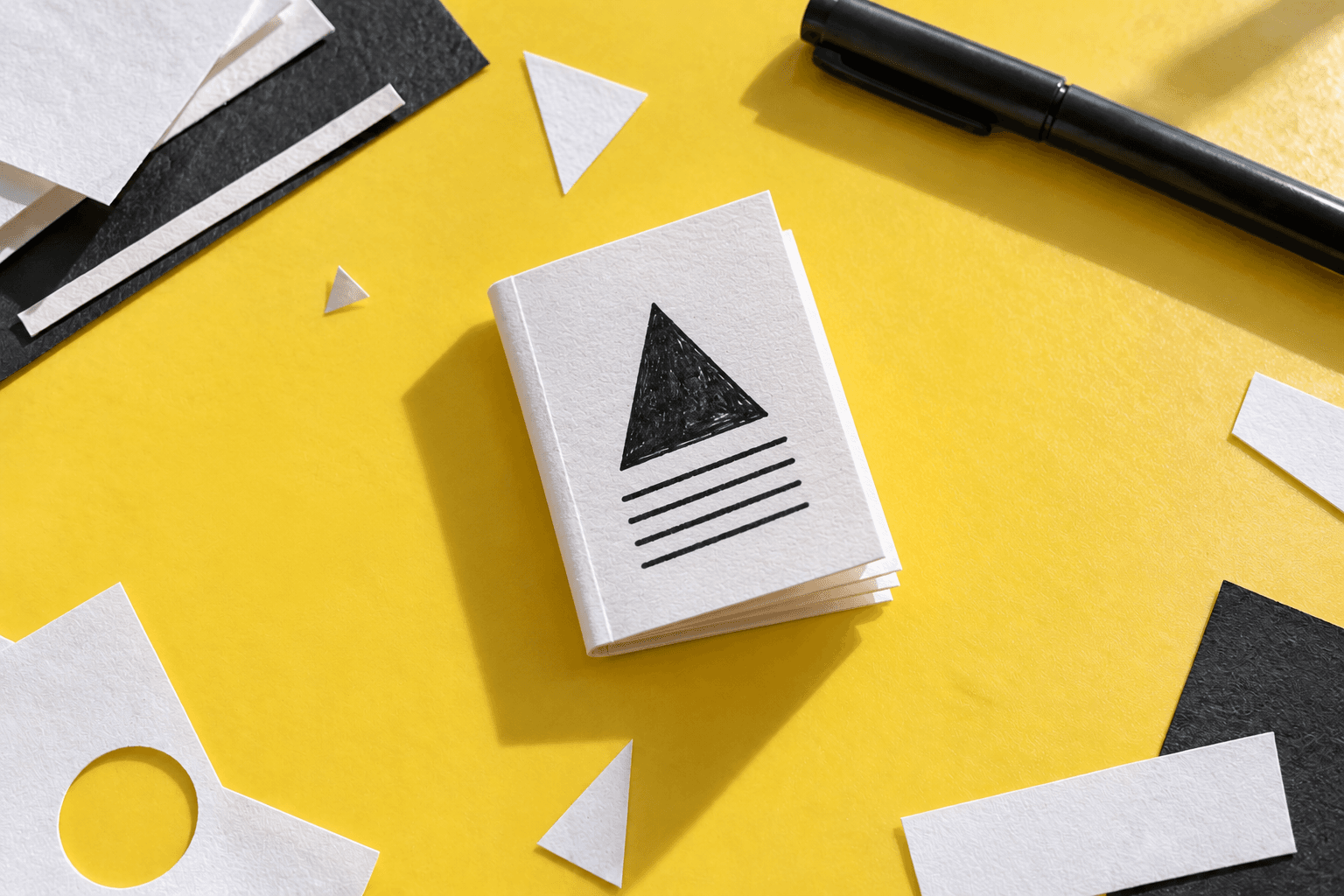
A zine is a self-published work with a place in DIY culture, not merely a tiny commercial magazine. Barnard’s introduction connects the form with accessible making and sharing knowledge and experience. You do not need a brand, a launch plan or an audience larger than one interested friend. A single sheet can become eight small pages, including the front and back covers.
Fold before you have anything important to say
Make the first booklet from blank letter-size paper. That keeps the page order from becoming a design problem too early. You will need a pencil, scissors and something to draw or write with. Thin collage pieces and a little glue are optional; heavy decorations can make a tiny book difficult to close. Use the ICA Boston folding sheet alongside the following sequence if the cut is hard to picture.
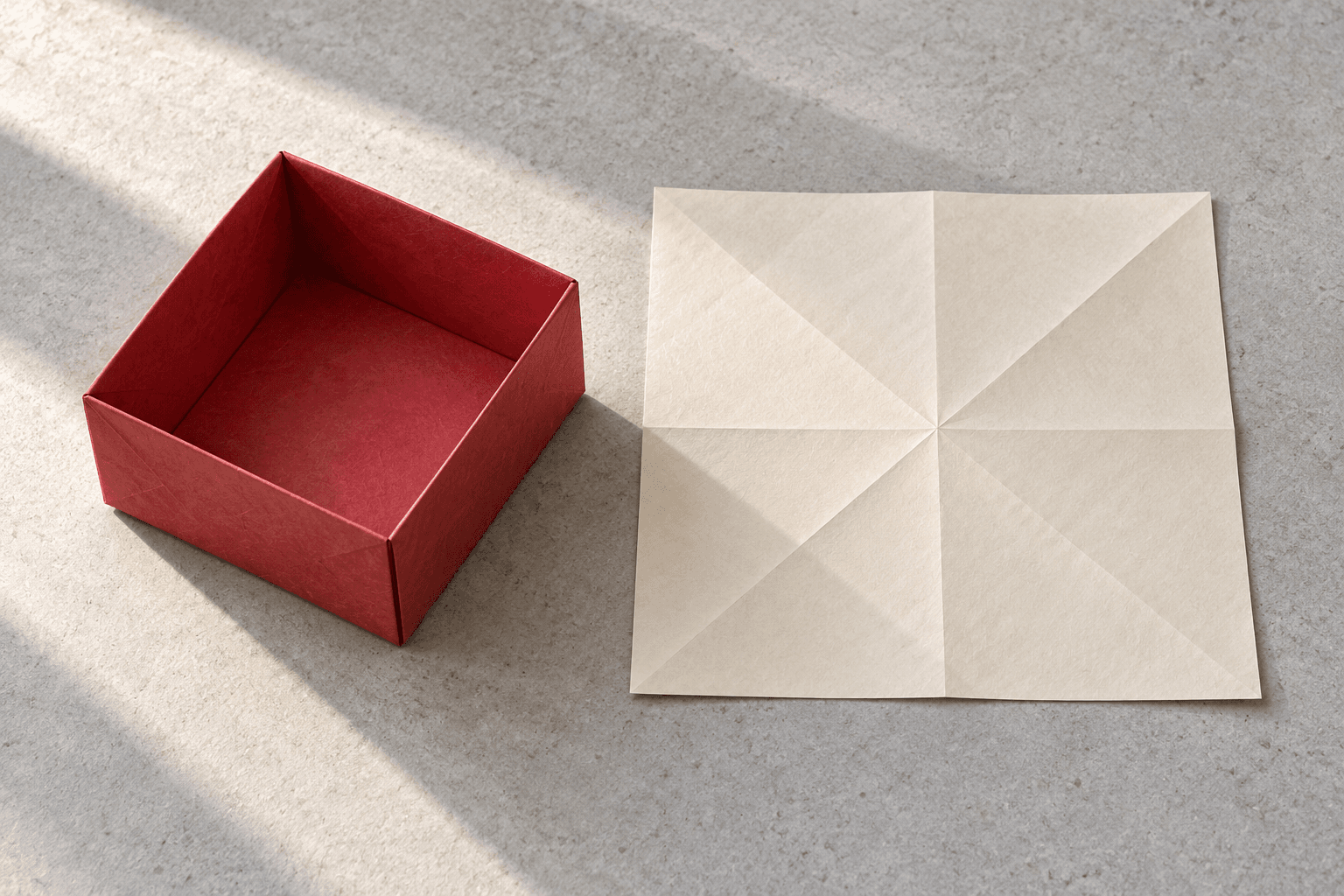
First make a grid of eight rectangles: fold the long edges together and reopen; fold the short edges together, fold that packet in half once more, then reopen. Fold the short edges together again. Cut from the folded spine along the middle crosswise crease only as far as the first intersecting fold—halfway across the folded packet. Do not cut all the way to the outer edge. Open the sheet to find a slit in its center.
Fold the long edges together so the slit sits along the folded side. Gently push the two short ends toward each other; the slit opens into a diamond. Bring the resulting sections together and fold them into a small booklet. Number the pages in reading order while it is still folded and add a small arrow for the top of each page. Then unfold it. The unexpected orientation of those numbers is precisely why making a blank model first helps.
Choose a subject you can finish looking at
“My life” is a difficult first topic. “Things left by the front door” is easier to contain and more likely to produce specific pages. Other possibilities are three things your neighborhood sounds like, the changing shape of one shadow, or a very personal guide to making an ordinary sandwich. These are original prompts to adapt, not a requirement to document the whole day.
Think of the cover as an invitation and the six inside pages as a short sequence. For the doorway idea, one page might show the whole corner, another a close-up of a scuffed shoe, and another a sentence about the person who put it there. You can repeat an object at a different scale. The page turn creates a pause that a row of pictures on a screen does not necessarily provide.
Edit the order before improving the decoration
Read the folded book once without stopping to repair it. Is there a page that repeats what you already know? Is there a jump that feels interesting or merely confusing? Move an idea, remove a sentence or let one page be mostly empty. Those are editorial choices, even when the drawing is rough. A limited color palette can help the book feel related without making every page identical.
Keep words and important marks away from folds and edges. If you want copies, unfold and scan or photocopy the sheet, then make one test copy and fold it before producing more. Do not assume a printer will preserve every margin. Use your own images or material you have permission to reproduce; an original collage for yourself and a publicly distributed edition are different situations.
One copy can be a real publication
This suits someone who enjoys arranging fragments but finds a full sketchbook or essay too open-ended. It may not suit a moment when you want clean, accurate reproduction without any folding experiments. You can simply fold a few sheets and staple a booklet another time; the one-sheet format is one tool, not the definition of the whole practice.
For material to begin with, try a journal made from three scraps. If you like the moment a flat sheet becomes useful, our folded-paper box offers another direction. This booklet, though, has a different pleasure: when someone turns its first page, they follow a sequence that did not exist until you put it together.
Sources & verification
Information checked: 2026-10-18