
Ideas
The Second Time You Make It: Turning One Recipe Into a Hobby
Repeating a familiar dish can be more interesting than collecting another recipe. Keep a useful starting point, change one detail and discover what you actually prefer.
By Hobby-ist Editorial Team · 4 min read · October 8, 2026
In this story
The first time you make a dish, the recipe holds most of your attention. Is that the right amount? What comes next? Why is the pan doing that? At dinner, you may be pleased simply because the food reached the table.
The second time is different. You remember the part that felt rushed, the texture you liked and the moment you wished you had prepared an ingredient earlier. There is room for a question that belongs to you. What would make this dish feel more like something you want to cook again?
That is a small but useful doorway into cooking as a hobby. You do not need a new appliance, an ambitious cuisine project or another saved recipe. One familiar dish can offer several interesting evenings.
Choose a dish you want to eat, not just improve
Start with something you already enjoy and can realistically make again: a simple pasta sauce, a vegetable soup or another familiar recipe suited to your kitchen. The reward has to survive the experiment. If you dislike the finished dish, repetition becomes a duty, however instructive it might be.
Choose a manageable batch and a normal evening. Cooking for guests with a fixed arrival time adds a different kind of pressure. The best first subject is one where you can notice a change without risking an important meal. A recipe that already fits your dietary needs is a better starting point than redesigning several ingredients at once.
Give yourself a starting version
Make the recipe as written once, using its specified ingredients, quantities and equipment where practical. King Arthur Baking’s recipe success guide makes this point for baking and recommends a scale when one is available. That is useful support for keeping a consistent starting version; it is not a claim that all cooking needs laboratory precision.
For a savory dish, remember a few things that would otherwise vanish: the amount you used, the pan, and the result you noticed. A note such as “good flavor, thicker than I wanted” is more useful than “7/10.” It names a question for next time. You do not need a spreadsheet or a photograph of every stage.
Change one detail you can recognize
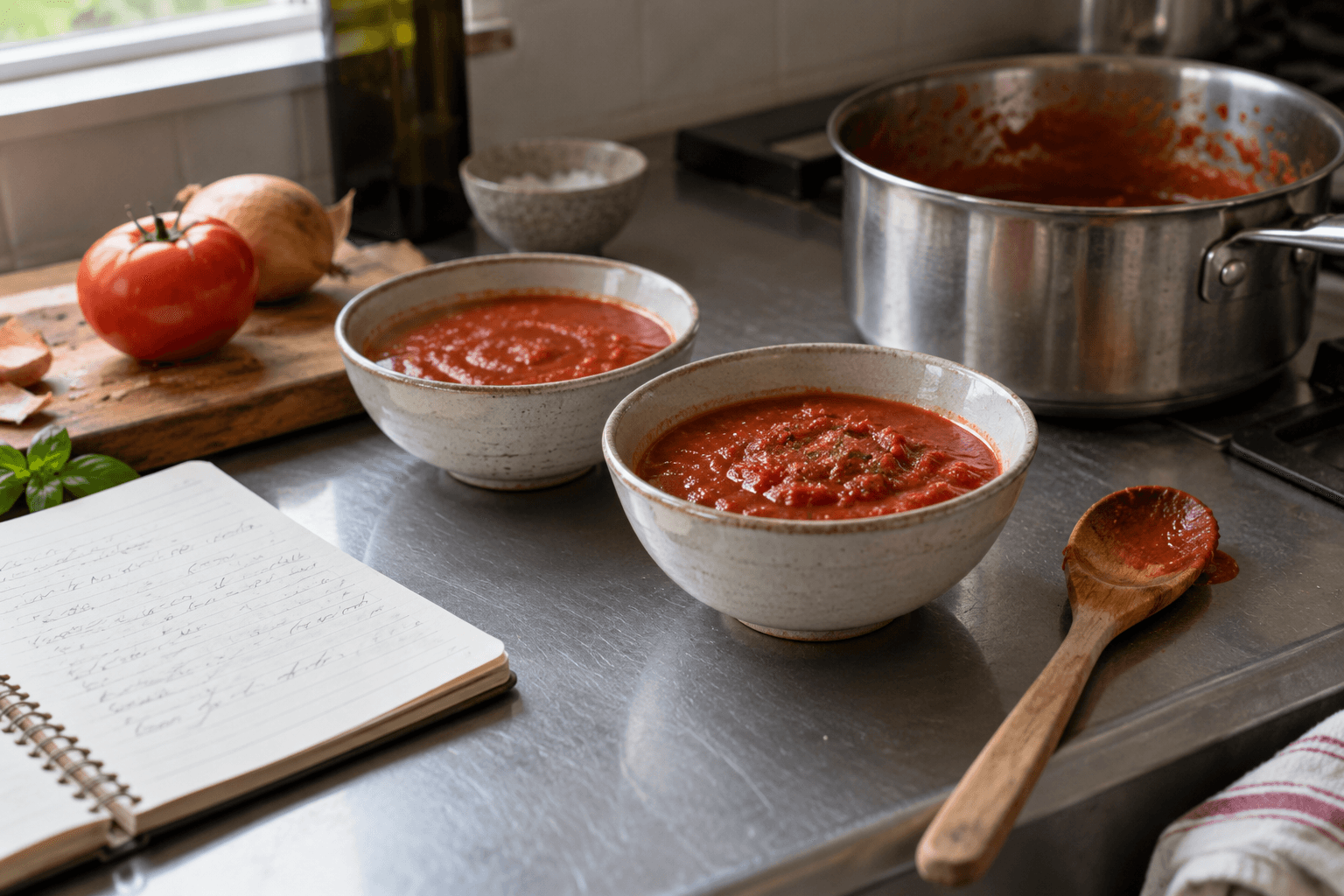
Imagine a familiar tomato sauce that was thicker than you wanted. Your next trial might keep the same ingredients and pan but finish at a looser consistency. You are comparing a specific preference, not proving that one version is universally superior. Another evening might ask whether you prefer a smooth or chunkier texture.
Use this illustrative plan to organize your next attempt, while following the recipe’s cooking instructions. Do not make safety-critical doneness, preservation or allergen changes into casual experiments. Follow appropriate recipe guidance. The interesting variable can be texture, serving style or preparation workflow rather than a food-safety decision.
Changing the ingredient brand, pan, amount and timing together can still produce a lovely meal. It simply makes it harder to connect the result to one decision. If your aim is discovery, keep enough things familiar that the difference has a name.
Taste for a description, not a verdict
“Better” often hides the most interesting part. Better how? Easier to spread? Less dense? More like the dish you wanted? A useful sentence might be: “I liked the smoother version with this pasta, but preferred the texture of the first batch on toast.” Both versions can have a place.
Do not rely on a perfect memory of last week’s taste. Describe each meal when you eat it and compare the notes. If a housemate wants to join, invite a preference rather than an exam: which would they want again, and why? If they just want dinner, let dinner be dinner.
The experiment can be about the evening itself
Sometimes the most meaningful improvement is not flavor. Preparing the ingredients before turning on the heat may make the process more comfortable. Choosing a smaller batch might reduce the dishes and let you cook on a work night. Record that as a real result rather than treating convenience as a consolation prize.
A class can be a good way to explore a technique you cannot yet repeat comfortably. Our pasta-making guide helps distinguish hands-on process from eating out. The EATZ tapas evening offers another shared cooking format. Bring back one idea you want to use at home, rather than feeling obliged to reproduce an entire event menu.
Stop when you have found your version
This approach suits someone who enjoys small differences and wants a dish to become familiar. It may not suit the week when novelty or a meal with no extra thought is what you need. Repetition is an option, not a new productivity streak; our essay on hobby streaks explores that distinction.
Hobby-ist’s judgment: repeat a dish until you understand one useful preference, then let yourself cook it without taking notes. The point is not an endless search for the best possible sauce. It is the pleasure of knowing why this version is yours.
Sources & verification
Information checked: 2026-10-08