Getting Started
Why Is My Succulent Growing Tall and Leggy? What to Check Before Watering More
Long gaps between leaves can point to insufficient light, but height alone is not a diagnosis. Identify the plant, compare its new growth and change conditions gradually.
By Hobby-ist Editorial Team · 4 min read · October 16, 2026
In this story
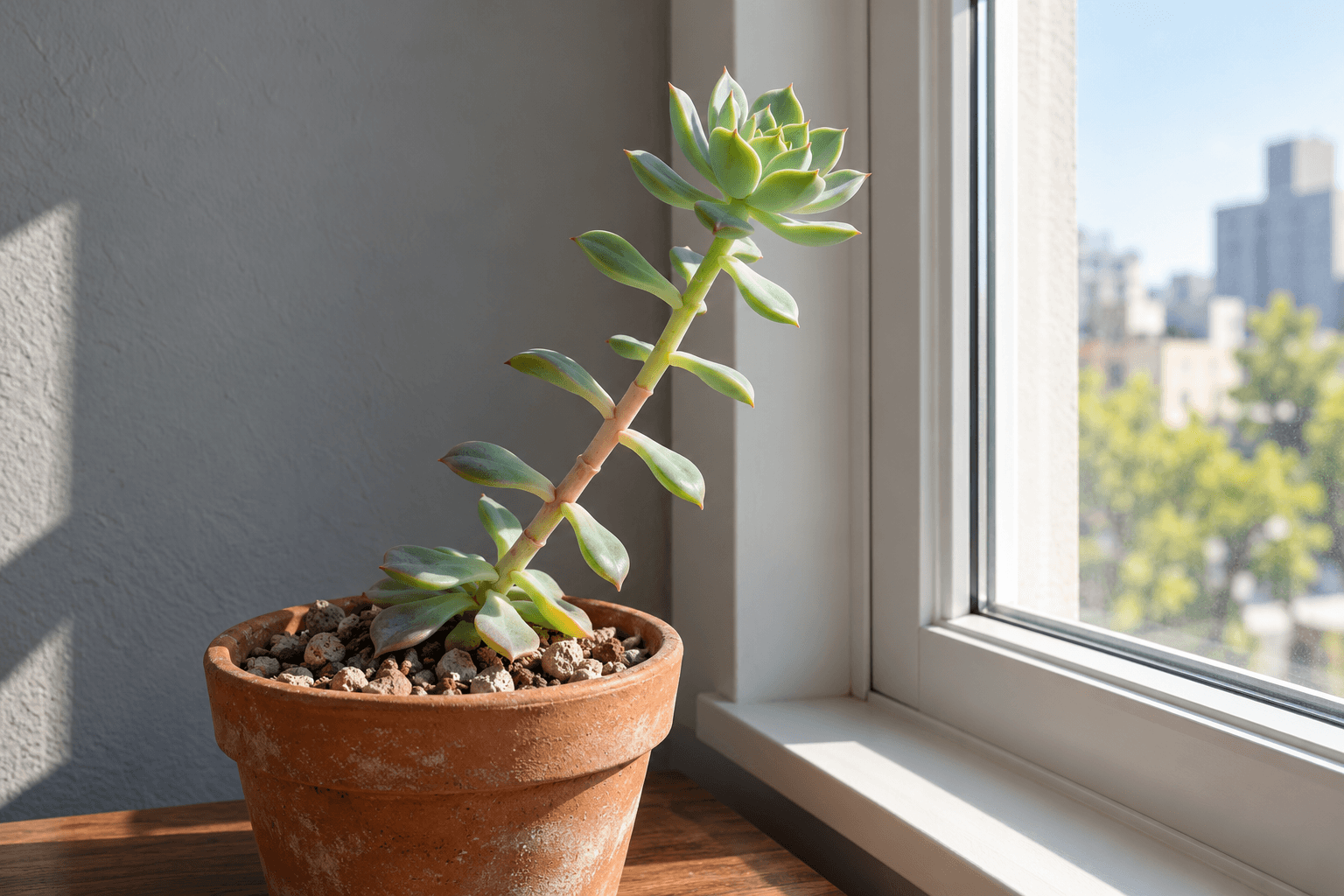
A succulent with thin, elongated growth and unusually large gaps between leaves may be stretching in insufficient light. But some varieties naturally grow tall. Identify the plant and compare its normal form before watering more, adding fertilizer or cutting off the top.
The plant you bought as a neat little rosette can look surprisingly different a few months later. Height feels like progress until the leaves seem far apart and the stem begins leaning toward the window. A useful response starts with describing that change, rather than trying every care adjustment at once.
Height alone is not the problem
The Mountain Crest Gardens growing guide distinguishes naturally tall succulents from light-starved growth. It suggests looking at leaf spacing, color and the expected form of the variety. That is a better comparison than a single photograph of a different species with a compact silhouette.
Find the name from the tag or purchase record if possible. Compare the shape with reliable information for that plant, and separate the main leafy stem from a different structure such as a flower stalk. A taller plant is not automatically a failed rosette. If you cannot identify it confidently, ask a nursery or local Master Gardener program with clear whole-plant photos.
Our first observation would be the newest growth. Are the recent leaves more widely spaced than the older ones? Has the stem become thinner or the color noticeably changed? Record what you see without forcing every detail into one diagnosis.
A bright room is not a light measurement
Look at where the pot actually sits through the day. A room may feel bright to a person while a plant receives limited light behind a deep shelf, curtain or neighboring object. Note the window direction, distance and periods of direct sun. Repeat the observation later in the day rather than judging the spot from one morning glance.
UC Master Gardeners explains that succulent light requirements differ and that too little sun can cause lanky growth, while too much can damage plants. “More sun” is therefore not permission to move a sheltered plant into harsh afternoon exposure without a transition.
The grower’s guide recommends a gradual move toward brighter conditions. Follow the identified variety’s requirements and the actual weather, particularly before moving outdoors. For our first adjustment, we would improve an appropriate light position gradually while keeping a short record, rather than change location, potting mix, feeding and watering on the same afternoon.
Do not make extra water the automatic answer
A long stem is not a request for a bigger drink. Check the plant’s watering needs, the condition of the mix and drainage separately. UC’s succulent guidance warns against constantly wet soil and emphasizes drainage. The appropriate interval depends on plant, pot, conditions and growth season; this article does not assign every succulent the same weekly schedule.
If the plant has soft collapsing tissue, persistent wetness or visible pests, the problem may need a different assessment. UC IPM’s light guidance notes that other root-zone and growth conditions can resemble light-related symptoms. Describe those signs when asking for help instead of assuming every elongated stem has the same cause.
Fertilizer is not a shortcut to a compact shape. Before buying a product, establish whether the plant has a nutrition need at all. The simplest useful intervention may be a better position and enough time to evaluate new growth.
What will recovery look like?
The grower’s guide cautions that some shape changes may be irreversible. Do not expect old stretched sections to shrink back into the original compact form. Judge the next suitable period of growth: whether new leaves and stems are developing more like the variety’s normal habit.
Take a photograph from the same angle with the date, then make a short note about the location change. That makes the comparison more honest than looking at a different angle each day and hoping the whole plant suddenly appears shorter. Avoid promising yourself a fixed recovery deadline; growth rate and season differ.
We would postpone pruning or propagation until you have identified the plant and stabilized its care. Those can be useful techniques for the right species, but they are separate decisions with their own instructions, not a universal emergency response to height.
Choose the plant for the place you have
If your available position cannot meet a variety’s light needs, a better long-term choice may be another plant. A grow light can also be considered, but it should match the plant and setup rather than be bought on color temperature or a decorative product image alone.
Our small herb-shelf grow-light guide introduces practical equipment questions, while the small-comparison approach in watercolor troubleshooting offers a familiar principle: change a condition you can observe before judging your ability.
A plant’s shape is information. Read it together with its identity and surroundings, then make one change you can learn from.
Sources & verification
Information checked: 2026-10-16