Getting Started
Your First French Press Coffee: Fix the Cup Before Buying Another Gadget
Muddy, thin or bitter coffee can point to different problems. Start with one repeatable brew, then change the detail that answers what you actually taste.
By Hobby-ist Editorial Team · 4 min read · October 15, 2026
In this story
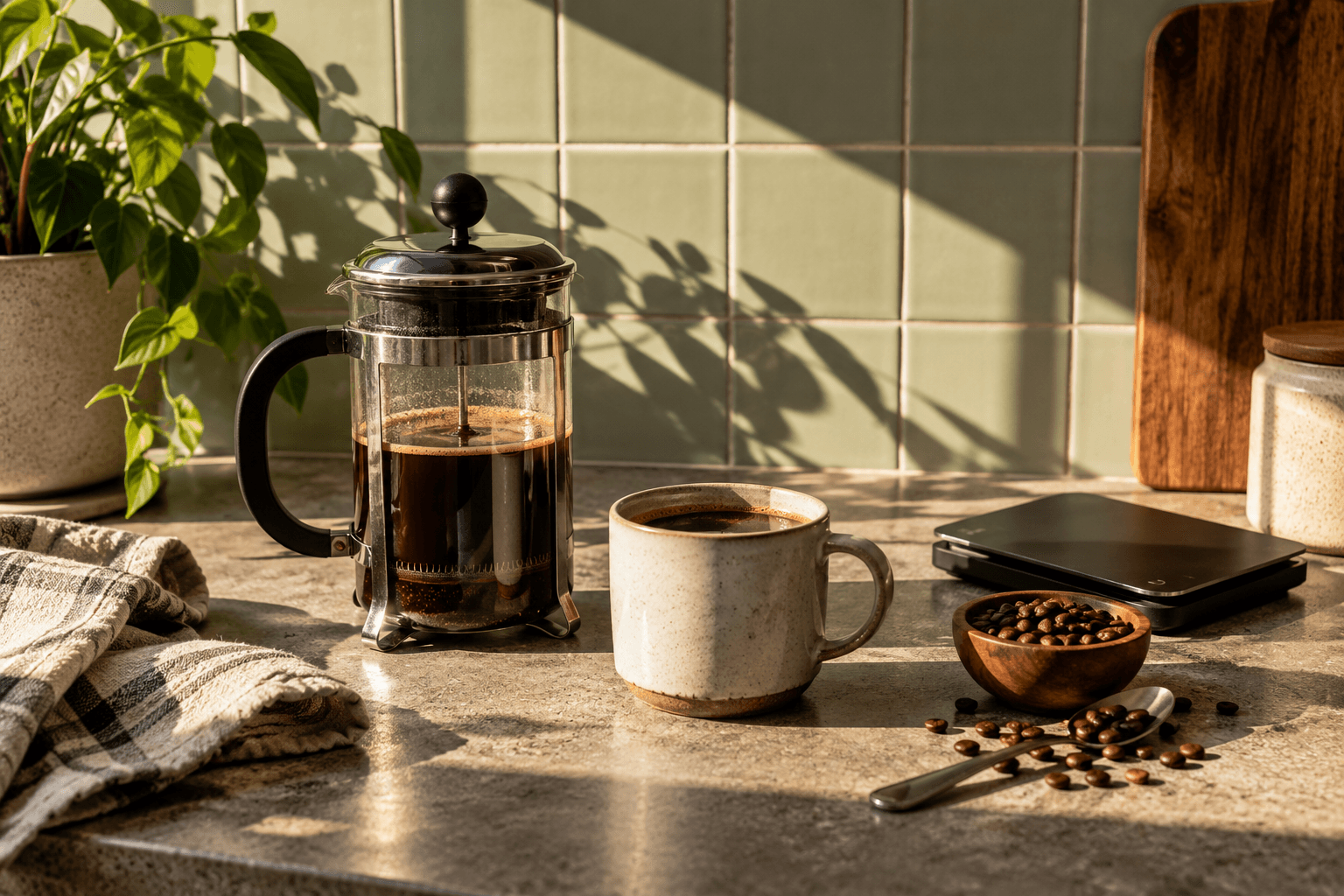
The first French press can look wonderfully simple: a glass cylinder, a handle and a plunger. Then the coffee arrives with a mouthful of grit, or tastes thinner than the smell promised. The next purchase starts to look inevitable. A new grinder, a special kettle, perhaps a different press entirely. Before shopping, give the cup a more specific complaint.
Is the problem texture, strength or flavor? They can overlap, but they are not the same. A cup can be strong and pleasant, weak and bitter, or flavorful with a sediment you dislike. Naming the part you want to change makes a small piece of kitchen equipment more interesting than a disappointing gadget.
Choose one starting recipe
Use a recipe you can repeat and a press large enough to hold it safely. Blue Bottle's current guide uses 30 g of coarsely ground coffee and 350 g of water, with a four-minute brew before a slow plunge and immediate pouring. Its water guidance is 205–210°F. This is one roaster's relatively concentrated starting point, not a universal ratio everyone must enjoy.
For an easier-to-compare editorial starting example, you could instead use 20 g coffee to 320 g water in a suitable press, keeping the grind and time consistent. That 1:16 example is our suggested experiment, not Blue Bottle's recipe. Choose one approach for the first cup; mixing the dose from one guide, the water from another and the timing from memory leaves you with no clear baseline.
Use a stable, heat-safe surface and inspect a glass press for damage. Follow your model's fill limits and instructions. Pour hot water carefully, keep the spout directed away from you and never force a resistant plunger. Slow brewing is not improved by pressing hard enough to turn the kitchen into a cleanup project.
What the metal filter changes
A French press does not produce the same texture as a paper-filter brew. Its mesh allows more fine particles into the cup. A little sediment can be part of the experience; a gritty last mouthful is not something you have to learn to love. If you prefer a very clear, light-textured drink, a paper-filter method may simply suit you better.
Try pouring smoothly without shaking the press, and stop before chasing every last drop from the bottom. Decant what you intend to drink rather than leaving the remainder sitting with the grounds. The Bodum brewing note also uses a four-minute starting brew. A familiar time is useful because you can notice what another change does, not because the fourth minute has magical power.
If the mesh is damaged, badly seated or dirty, solve that before changing the coffee. Let the parts cool and clean them according to the maker's instructions. A press that is easy to use but unpleasant to wash may quietly stop being part of your morning; include cleanup in your judgment of the method.
Give the next cup one question
If the drink is thin but otherwise pleasant, keep the water amount steady and increase the coffee a little next time. That asks a strength question. If it is muddy, inspect grind consistency and pouring before buying darker beans. If it tastes harsh, consider the roast you chose, your grind and brewing conditions; bitterness alone cannot prove which one is responsible.
Change one thing for a second cup. Keep the same bag of beans, water amount and timing if you are comparing doses. Keep the dose steady if you are changing grind. You do not need a spreadsheet: a line such as 'same coffee, slightly less water; liked the body' is enough to make tomorrow less mysterious.
Let the coffee cool enough to taste comfortably before judging. A very hot mouthful is a poor basis for deciding whether a subtle flavor is missing. Avoid using a sharp sensory description from a bag as an exam question. You are allowed to like a cup without finding the advertised fruit in it.
The equipment you might actually need
A scale helps repeat amounts. A timer can be the one on your phone. If you do not own a grinder, a small amount ground for your method by a coffee shop can help you try the press before buying another appliance. Ask when it was ground and buy an amount you can use sensibly. This does not promise it will perform exactly like freshly ground coffee; it is a practical entry route.
Before adding equipment, notice whether the existing routine fits. Do you like measuring, waiting and washing a filter? Does another person need the counter while the press sits there? The right coffee hobby can be a few quiet minutes, not a kitchen that has to be surrendered every morning.
Our guide to repeating a recipe develops the pleasure of changing one familiar thing. Our shared-space guide is useful when that experiment has to fit a busy home.
Hobby-ist's judgment: keep the French press if you enjoy its body, its simple sequence and the cups you can adjust. Choose another method if the texture or cleanup is the part you keep fighting. The useful outcome is a morning drink you want again, not a countertop that proves you take coffee seriously.
Brewing references checked October 14, 2026. Suggested comparison recipes are starting points; follow your equipment's instructions.
Sources & verification
Information checked: 2026-10-14