
Curated by
Hobby-ist Editorial TeamA trolley changes a map. A road you know as a drive becomes part of a different imagined journey: a stop, a shared vehicle, another neighborhood connected by rails. You do not have to be a locomotive enthusiast to find that interesting. A railway museum can be about how a region moved, and about the ordinary people whose days were organized around those movements.
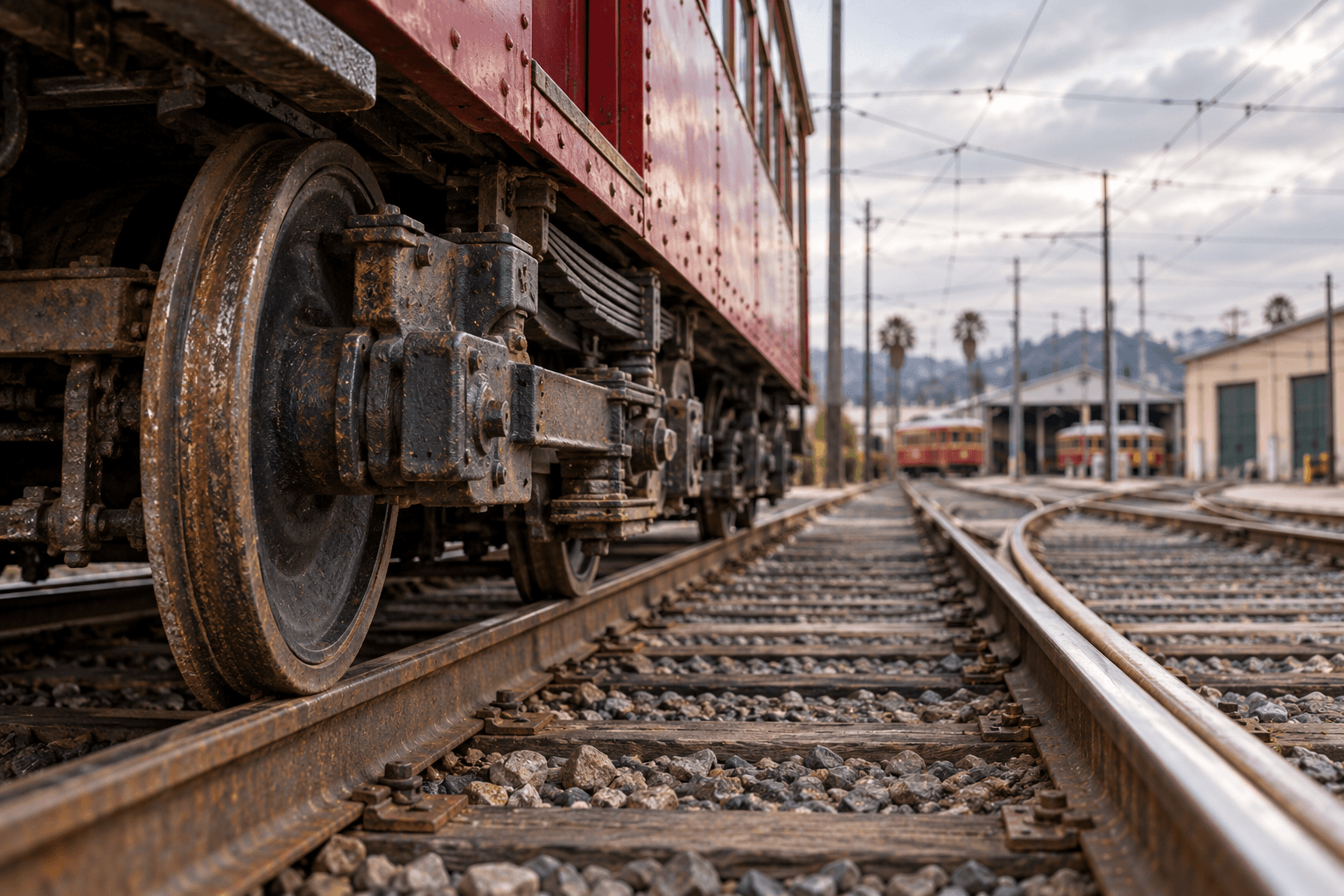
Southern California Railway Museum in Perris offers that shift in perspective. Its collection includes the Pacific Electric interurban system and Los Angeles Railway streetcars, along with locomotives and other rail equipment. We would make the trip for the relationship between a full-size object and a familiar place. A model is enjoyable to study; standing beside the scale of the actual equipment asks a different question about the city it served.
Red cars, yellow cars, and different journeys
The museum’s collection introduction distinguishes Pacific Electric’s regional interurban network from the local Los Angeles Railway streetcars known as Yellow Cars. That distinction makes the collection less of a row of similar old vehicles. One way to look is to ask whether a car belonged to a journey across the region or movement within the city.
Start with one vehicle, rather than trying to identify every company and number. Look from the permitted visitor area at the space it would occupy beside a person: the doorway, windows and distance between wheels. Then connect a detail with a practical question. How would passengers get in? Where would a driver see? What part of the vehicle suggests it was designed for repeated everyday boarding?
The answer belongs with the museum’s interpretation, not a guess made from a photograph. Still, questions about use make the machinery approachable. For a child, “Where would we sit?” may be a more productive opening than a date. For an adult, it may bring an otherwise abstract transit history down to the scale of a commute.
Choose a riding day or a looking day
The regular visitor page lists grounds hours Tuesday–Sunday, 9am–5pm, with train and trolley operations on selected weekends. The important word is selected. Grounds access, an open exhibit building and an operating ride are three different things. Do not promise the youngest member of the group a particular train simply because the grounds are open.
We would check the actual day’s ride program before choosing a departure from LA. If riding is the whole reason for the journey, that program should determine the date. If you prefer the equipment, the collection and a quieter conversation, a weekday guided-tour arrangement may be the better starting point. Advance weekday tours are listed at $5 per person; a spontaneous docent encounter depends on availability.
For a first weekend, our suggested sequence is one confirmed ride, a break, then one collection area that connects with it. Leave room to discover whether the group likes the trolley, the model railway or simply looking at the largest equipment. The museum covers a large outdoor site, so a plan built around two satisfying parts is more forgiving than a promise to see everything.
This October 24 is not an ordinary free-grounds Saturday
The Fall Railroadiana Swap Meet is listed for October 24, 2026, from 9am–2pm. Its admission is separate: online presale adult $8 and ages 5–11 $6; day-of adult $10 and ages 5–11 $9. Children under five are free. Unlimited trolley rides are an extra $4 online or $5 day-of. Confirm the chosen booking and any fees before paying.
That difference matters for a family budget. Two adults and two children aged 5–11 total $28 at listed online admission rates, or $38 on the day. Adding the trolley upgrade for all four gives $44 online or $58 day-of, before checkout fees and purchases. These are arithmetic comparisons of advertised categories, not confirmation of available tickets or an all-inclusive ride package.
For collectors, the attraction is a field of books, models and railway memorabilia rather than only a ride. The host notes that vendors may leave before 2pm, making an early visit more useful than a late browse. Someone seeking an unhurried regular museum day may prefer another date. A special event is not automatically the best first visit for every family.
The practical details that change the afternoon
Use 2201 South A Street, Perris, as the destination. The visitor guidance lists free parking, picnic space and important accessibility distinctions: mainline trains have a wheelchair lift on request, while historical trolleys are not wheelchair accessible. Ask about the actual service you intend to use instead of assuming one boarding arrangement applies to everything.
This is a working railway. Stay in permitted areas and treat track crossings as crossings, rather than places to pose. For an outdoor afternoon, bring a meal or snacks that suit your group and leave a real rest break. We would not attach a distant second destination just to make the drive feel more efficient.
Our Santa Paula museum guide offers another way into the machinery behind everyday life. If your group would rather make something than look at equipment, compare the weekend’s craft and community options. Perris is our choice when the old journey itself is the interesting part. You might arrive for a ride and leave with a new way of seeing the roads home.
Sources & verification
Information checked: 2026-10-21