
Curated by
Hobby-ist Editorial TeamYou have saved the equipment page, watched the demonstration, and begun imagining where the machine might fit at home. The project itself is still a little vague.
Octavia Lab offers a reason to reverse that order. In a shared creative space, the first question can be what you want to make and what you need to learn—not which device deserves a place on your desk.
Hobby-ist chose this library lab as a place to give an idea clearer edges. A tour can be useful even when it ends with no purchase and no finished object.
Three different stages
The official page offers tours during lab hours without reservations. Equipment use requires lab membership: a library card in good standing, photo ID and an agreement submitted in person. Members reserve equipment by phone or in person, not email. The lab is on Central Library’s Lower Level 2; library opening hours alone do not establish lab access.
Describe the smallest version of your idea
Instead of “I want to learn all of this,” try describing one test: a short recording, a simple prototype, or a file you want to turn into an object. Ask what you would need to prepare and which part requires instruction. Keep the answer somewhere you can use it before a future booking.
Then consider whether the equipment is actually the missing part. Perhaps the next step is improving a file or making a rough version with materials already at home. A shared lab can help you ask that question without owning the entire setup first.
Who it suits
This is useful for a local beginner deciding between recording, digital design or fabrication interests. It is less suitable if you need exclusive equipment at a guaranteed moment, unrestricted commercial production or a finished project during a first exploratory visit. A shared lab trades ownership costs for planning and equipment rules.
Transport and our verdict
Read the library’s parking and accessibility guidance linked from the official lab page. Leave time to find the correct lower level and keep a first tour separate from a future equipment booking. Our verdict: an excellent research stop before buying gear, provided you treat access as a process rather than immediate ownership-style freedom.
A tour, a project session, or buying equipment?
Start with a tour if you want to understand what the lab makes possible. Start a project visit only after membership, equipment requirements and a reservation have been settled. Buy your own equipment when repeated access, space and maintenance make sense for your actual use. Confusing those three stages can turn an inexpensive first idea into an unnecessary purchase.
The lab lists technologies for recording, digital design, fabrication and textiles. That range is attractive, but it is also a reason to narrow your question. “I want to make things” gives staff little to work with. “I want to record a short spoken piece” or “I want to learn what a small model would need before printing” begins a more useful conversation. These are example briefs, not a promise that a particular machine is immediately available.
A first-visit brief to bring along
Write down the intended output, its approximate size or length, and what you already have—a sketch, file or idea. Ask which equipment fits, what preparation or training is needed, and how a later reservation works. Our proposed first visit ends with a next step you can actually complete, rather than a bag full of supplies for five projects.
Questions that prevent a wasted trip
Does a library card immediately unlock every machine?
No. Lab membership is a separate in-person process, and equipment use requires following its current procedures.
Can I email an equipment booking?
The lab accepts equipment reservations by phone or in person, not email. Use email for questions, then the stated channel for the reservation.
Should I bring materials on the first tour?
Ask first. A material suitable for a home project may not suit a lab machine or its rules. A useful question costs less than unusable supplies.
Keep exploring
For a fabrication project, use Check whether you need a 3D printer to decide whether shared access could replace ownership. If audio is the goal, read Compare first recording setups before selecting a recording setup.
A first visit has done its job if the project is easier to explain afterward. “I need this equipment for this one test” is a more useful starting point than a longer shopping list.
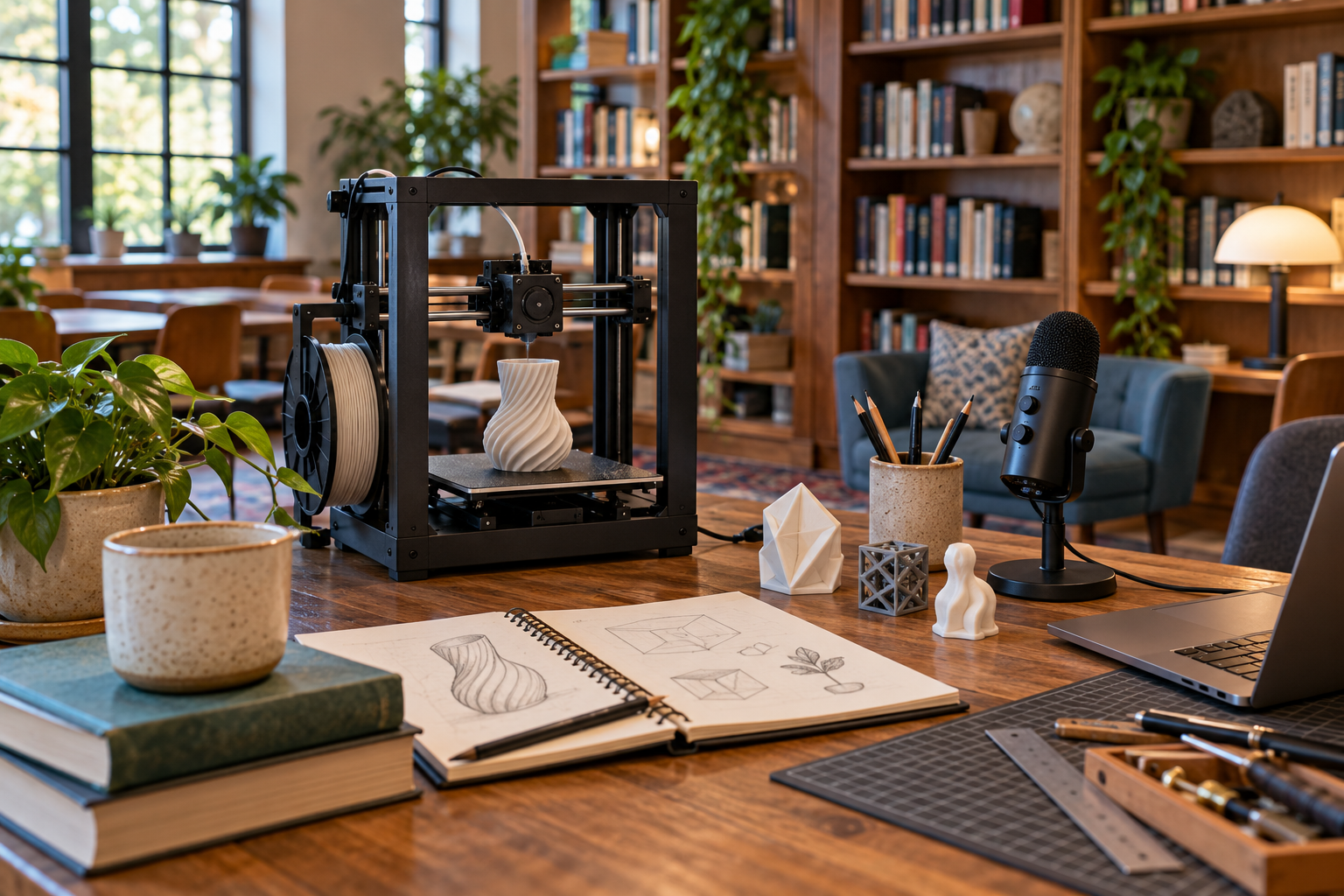
Researched by Hobby-ist Editorial Team from the official sources on October 6, 2026; not a firsthand visit or review. The activities and conversation prompts suggested here are editorial proposals. Recheck current availability and terms with the organizer. Cover: AI-generated concept, not a photograph of the venue.
Sources & verification
Information checked: 2026-10-06