Getting Started
Why Is My Knitting Curling? Stockinette Edges Are Not Always a Tension Mistake
A scarf that rolls into a tube may be behaving exactly like stockinette. Identify the fabric before buying bigger needles or hoping blocking will permanently flatten it.
By Hobby-ist Editorial Team · 4 min read · October 18, 2026
In this story
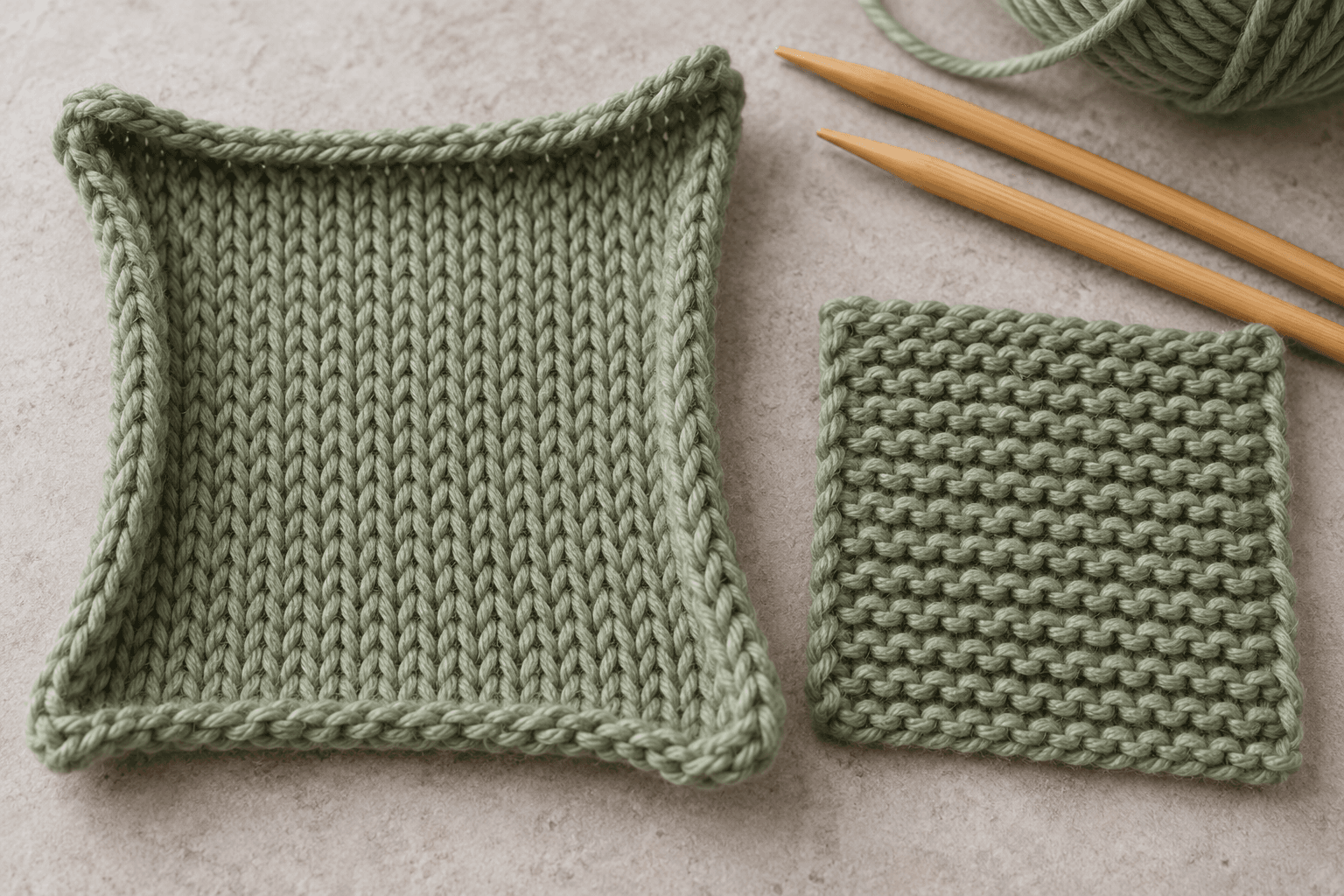
If a flat piece of stockinette rolls at its edges, the curl may be a normal property of the fabric rather than evidence that you knit too tightly. Stockinette has unlike front and back structures; the edges tend to turn rather than lie flat by themselves. Changing tension alone does not reliably turn a plain stockinette scarf into a flat fabric.
That answer can be a relief when you have already unrolled the same five inches several times. It also changes what to do next. Before buying another needle size or knitting the rest on faith, decide whether the curl is welcome, manageable or incompatible with the object you want. A rolled edge on a hat and a scarf that hides half its width are different design outcomes.
First identify what you have actually knitted
Worked flat, stockinette usually alternates a knit row and a purl row, producing V shapes on one face and purl bumps on the other. Garter stitch, commonly made by knitting every row when working flat, has ridges on both faces and behaves differently. Working in the round changes the instructions, so check the intended fabric rather than relying on a remembered rule about rows.
If the whole rectangle rolls regularly, structure is a strong clue. If one edge grows wider, stitches disappear or only one part pulls oddly, inspect the stitch count and pattern as well. Curl and an accidental increase can happen at the same time. Lay the work gently open to see it; do not stretch it hard enough to disguise the shape you are trying to understand.
Blocking helps you evaluate the fabric, not erase its identity
Purl Soho’s Daily Scarf discussion explains that stockinette naturally curls and suggests blocking and borders to reduce the effect. Its Asymmetrical Wrap guidance also notes that the yarn affects how strongly the fabric rolls and how it responds. Those are good reasons to test your own yarn, not to promise that soaking will permanently flatten every project.
Make a small swatch with the same yarn, needles and fabric as the project. Follow the yarn’s care instructions and an appropriate blocking method, then let it dry completely before judging it. Measure and photograph the relaxed result after it comes off any pins. A rectangle held flat by pins is not the same as a rectangle that remains flat in use.
Avoid aggressive heat or stretching as an improvised cure. Fiber blends respond differently, and heat or agitation can damage some yarns. If you cannot identify the yarn, test a spare sample before treating the whole item. The question is whether the fabric becomes suitable for its job, not whether you can force it to match a photograph for a moment.
Choose an edge that belongs to the object
For a new flat accessory, consider a pattern with a garter, seed-stitch or other suitable border designed into it. A token stitch at each side may not counter a broad center of stockinette. The needed width depends on yarn, gauge, proportions and intended finish; there is no universal three-stitch fix. Use a tested pattern or compare a bordered swatch before committing to the full length.
A useful comparison is two small samples: plain stockinette and the same center with the border you plan to use. Treat them alike, let them dry, then handle them as you would the finished piece. Does the border lie comfortably? Does it change the drape in a way you enjoy? This small comparison is our recommended planning exercise, not a reported test result. It can reveal a design compromise more honestly than a perfect-looking photo of someone else’s yarn.
Do you need to start again?
Not automatically. If the curl suits the item or the piece will be seamed into a garment, the pattern may already account for it. Read the finishing instructions before changing the design. If you need a flat scarf and dislike the tested result, restarting in a more suitable fabric may save more time than adding length to something you will not use. An added border is another possibility, but it changes dimensions and appearance; it should be a considered alteration, not a guaranteed rescue.
We would keep knitting when the shape serves the project and pause when the desired object depends on a result the sample does not support. This approach suits a beginner who wants to understand the material rather than blame every surprise on technique. Sources checked October 18, 2026.
For a different shape problem, our crochet-widening guide shows how counting can separate construction errors from expectations; crochet instructions should not be copied onto knitting. If you want a thread session with another kind of surface, embroidering a leaf offers a change of pace. The curled swatch has not necessarily failed. It may have just told you what kind of fabric you made.
Sources & verification
Information checked: 2026-10-18