Perspectives
A Letter That Does Not Need an Occasion
You do not need news important enough for a card. One ordinary detail, written for one person, can be a good reason to put pen to paper.
By Hobby-ist Editorial Team · 4 min read · October 18, 2026
In this story
The problem with waiting for a good reason to write is that ordinary days rarely announce themselves as material. Nothing much happened. The week was busy. You meant to get in touch. Meanwhile, a small detail keeps returning: a shop sign your friend would have laughed at, a recipe that nearly worked, a song you heard through an open window.
That is enough for a letter. Not a report on your life, not an elegant account of everything since you last spoke. One page for one person, built around something you would have told them if they had been walking beside you. Handwriting can be a hobby here because choosing, arranging and making the page are part of the pleasure, not merely a slow substitute for a message.
Choose the reader before choosing the stationery
Begin with someone whose company you can imagine, and a form of contact they would welcome. If a letter feels too formal, make it a note. If holding a pen is uncomfortable, type and print it or use another format that works for you. The personal part is the attention, not a test of handwriting endurance.
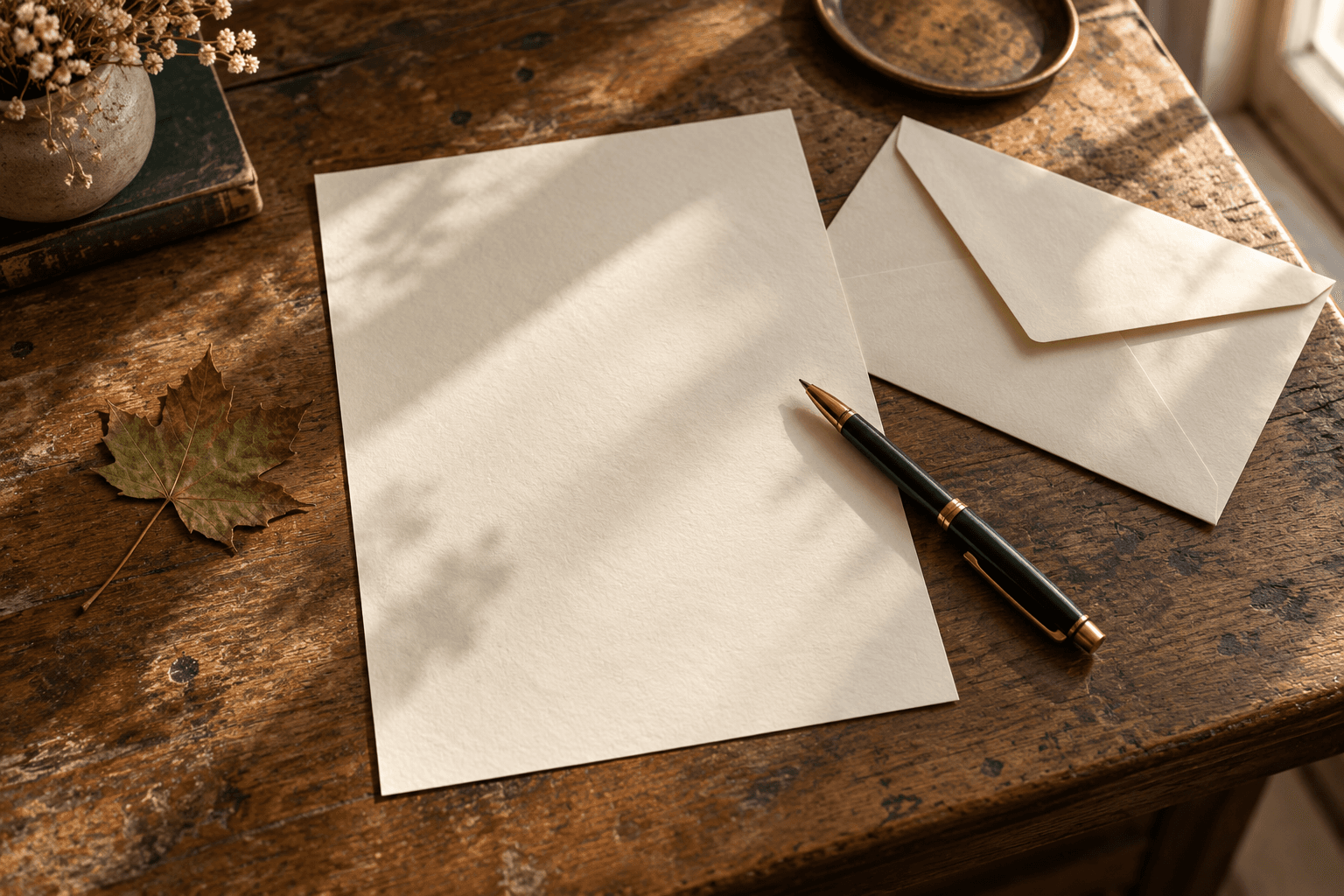
Use paper you already like enough to write on. A notebook sheet and an ordinary envelope are fine. Fancy supplies can be enjoyable, but they sometimes raise the stakes before a single sentence exists. We would choose a modest page for the first attempt so the recipient feels more important than the object. Save the beautiful paper if it makes starting harder; use it immediately if it makes starting fun.
Start in the middle of a small story
Try “I passed the place where we used to…” or “I made that dish you mentioned, and…” rather than a long apology for not writing. These are prompts, not facts about your own life: replace them with a detail that is true. Describe the part the other person can picture. A crooked shelf, a stubborn dough or the seat you always choose can carry more warmth than a general declaration that life has been hectic.
Then tell them why it made you think of them. That second step changes an anecdote into a letter. Without it, you may be composing a diary entry with a salutation. The connection need not be profound. Remembering a shared joke or the way someone notices birds is a reason. You are letting another person see where they still appear in your ordinary day.
A practical shape is a greeting, one scene, its connection to the reader, one genuine question and a closing. Use it if it helps, then forget it when the writing finds its own rhythm. The question should invite a reply without creating an assignment. “Have you cooked anything you want to make again?” leaves more room than asking for a full account of the last six months.
What to leave out can make the page kinder
You do not have to catch up on every missed conversation. A first letter overloaded with news can feel like a backlog transferred to the reader. Choose what belongs to this page and let the rest remain for another conversation. If the subject is urgent, use a timely form of contact rather than expecting a posted letter to do that job.
Read the draft once for clarity. If a sentence sounds like a performance, say it more simply. Cross out a word if you need to; a visible correction is not a spoiled object. At the same time, check that the reader can understand the handwriting and that the names and details are right. Care is compatible with imperfection. It is not the same as refusing to revise.
The envelope is part of finishing
If you plan to post it, confirm the recipient’s current address and the postage for your destination, dimensions and weight. Do not copy an old address on the assumption that it is still current. You can also give the note in person if that suits the relationship. Writing a page and deciding how to deliver it are separate small decisions; do not let an unresolved delivery detail erase the pleasure of making it.
A letter left unsent can still tell you something, but it is worth being honest about which activity you want: private writing, making a paper object or reaching another person. Each is valid; they are not identical. If you prefer keeping scraps for yourself, a three-scrap journal gives those details a home. If the page needs a small picture instead of more words, try drawing a familiar object.
You may discover that the ordinary detail was not too small after all. It was simply waiting for a particular reader.
Sources & verification
Information checked: 2026-10-18