Perspectives
Before You Press Play Again, Stay With One Chess Mistake
The next game promises a fresh start. Your last game may offer something more interesting: a chance to understand the move that surprised you.
By Hobby-ist Editorial Team · 4 min read · October 17, 2026
In this story
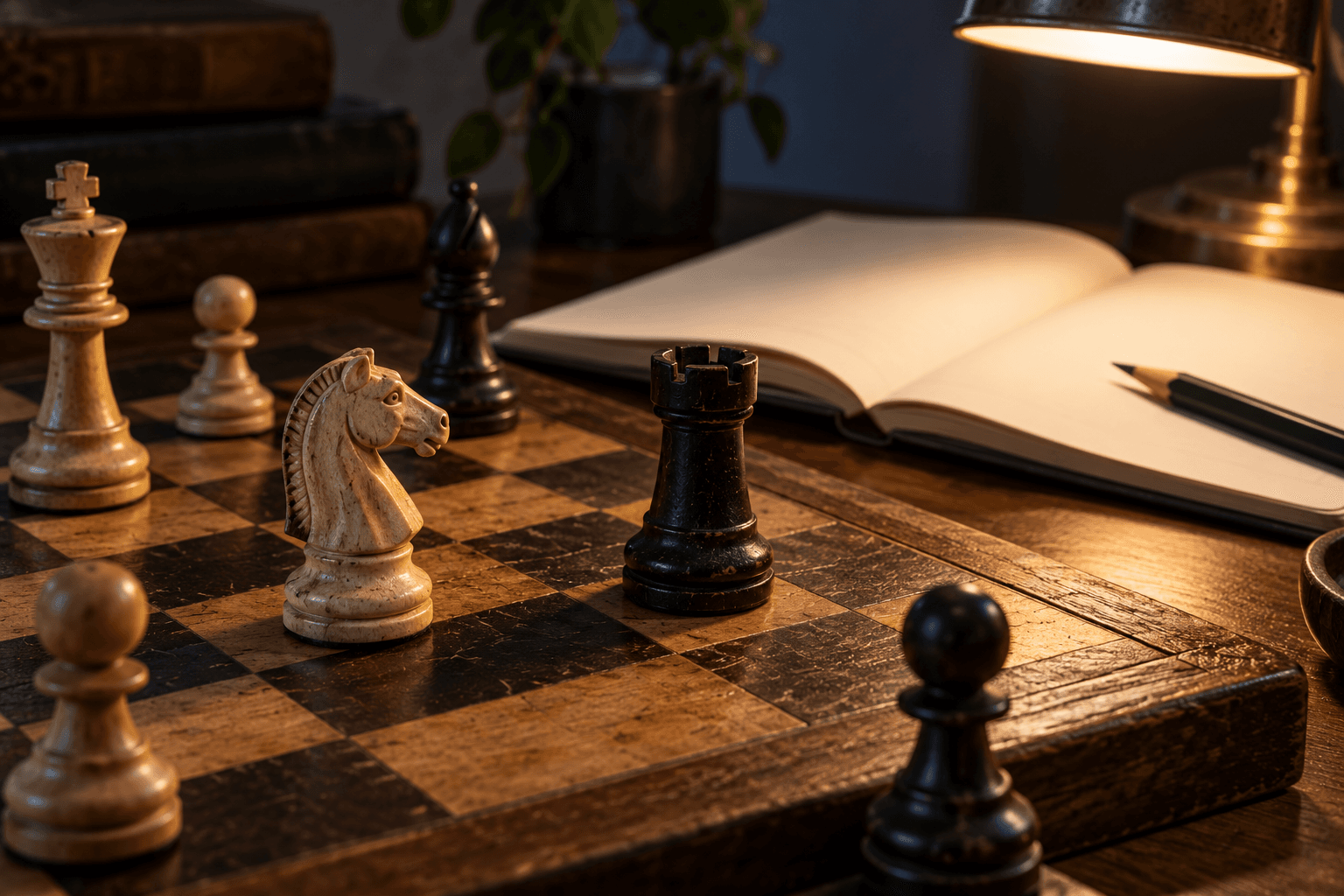
The rematch button is particularly inviting after a bad loss. A new board can make the last ten minutes disappear. But the move you want to escape may contain a more interesting hobby than the next quick game: the small detective story of what you thought was happening and what was actually on the board.
We would not turn every casual game into a lesson. Sometimes playing with a friend is enough. For one completed game this week, though, try stopping before the next pairing. Choose a moment that surprised you and give it ten quiet minutes. The aim is not to produce a master-level analysis. It is to make one decision legible to yourself.
Find your surprise before the computer finds its blunder
Replay the finished game until you reach a move you remember feeling good about, uncertain about, or shocked by. Hide the evaluation bar and suggestions if your tool allows it. The official Chess.com analysis instructions explain controls for engine lines, arrows and evaluation. Features and access can vary; a physical board and a saved move list work for the first part too.
Write down what you expected your opponent to do. Then write what happened. Those two sentences can be more revealing than a red label. Perhaps you saw your own attack and forgot a hanging piece. Perhaps the clock changed your decision. Perhaps a move was objectively acceptable, but your plan afterward was unclear. A numerical verdict does not automatically distinguish those experiences.
Try one alternative with an actual reply
Return to the position before your move. Choose one alternative you can explain in plain language: protect a piece, answer a threat, or move a king away from danger. Make a plausible opponent reply rather than letting the other side cooperate. Continue only a few moves. If the position becomes too complicated, stop and record the question instead of inventing certainty.
For example, “I wanted to attack the queen, but I had not checked whether my rook was defended” is useful without a long variation. Do not call every missed opportunity a failure of concentration. A tactical pattern you have never learned is a different problem from something you knew and rushed past. Naming the difference helps you choose a practice that fits.
Now reveal the engine or use the review tool. Compare its suggestion with your own explanation. If you cannot understand why a move works, play through the suggested continuation slowly. Keep the part you can explain; leave a difficult branch for another day or a coach. We would rather retain one understandable idea than copy six lines that become meaningless when the screen closes.
A score is not a portrait of the player
Chess.com’s Game Review explanation distinguishes its Accuracy score from a rating or an overall measure of strength. Treat a single game accordingly. An easy position and a chaotic struggle do not ask the same questions of a player, and a high number does not tell you what made the session enjoyable.
If review makes you dread playing, reduce the task. One moment from one completed game is enough; reviewing a win can be just as interesting as reviewing a loss. Do this after play, never by consulting an engine during a live game against another person. The pleasure comes from investigating a decision honestly, not borrowing an answer when you are supposed to find it yourself.
Take one question back to the board
Finish with a question you can use next time: “What changed after my opponent’s last move?” is more actionable than “Stop blundering.” Close the notebook after answering it once. Improvement is not guaranteed by a short ritual, but the next game can begin with a clearer intention instead of a need to erase the previous result.
If you want a more social board, our chess-at-LACMA story explores the conversation around a game; verify current event dates before visiting. If you like learning to pause before another attempt, leaving a jigsaw unfinished offers a quieter parallel. Not every satisfying session needs to end with a win. Sometimes it ends with a move you finally understand.
Sources & verification
Information checked: 2026-10-17